By Patricia Fraga
In our ongoing journey toward smarter, happier environments, it’s time to focus on harmonizing our physical and digital spaces. In the third step, we will explore practical ways to organize and optimize these environments, creating spaces that promote well-being and efficiency in our daily routines.
By looking around us, in both the physical and digital worlds, we can identify areas of clutter and excess that negatively impact our productivity and well-being. Therefore, the first step is to recognize these areas and look for ways to simplify and organize our environments. It is worth remembering that planning is fundamental to organizing anything in life.
Today, we’re going to dive into organizing and harmonizing our physical and digital environments. In physical space, we can start with a simple observation exercise. Take out your “My Journey to Happiness” notebook and make a list of the areas in your home or workplace that are disorganized or overloaded with objects. Then choose one of these areas and dedicate some time to organizing it, creating effective storage systems, and eliminating unnecessary items.

In the digital environment, excess information can be equally stressful. Take the time to review your email folders, files, and applications, eliminating what is no longer useful and creating an organizational structure that makes it easy to access important information.

Write down in your notebook the steps you are taking and how this is contributing to a feeling of greater clarity and control.
When you finish these activities, reflect on how the organization of your physical and digital spaces impacts your quality of life and productivity. How do you feel now about your surroundings? Write down your observations and feelings in your notebook.
Be aware that by harmonizing your physical and digital spaces, you are creating an environment conducive to well-being and efficiency in your everyday life. Our next text will address how these practices can be extended to corporate environments, promoting prosperous and happy businesses. Continue following our journey in search of a more conscious and fulfilling life.
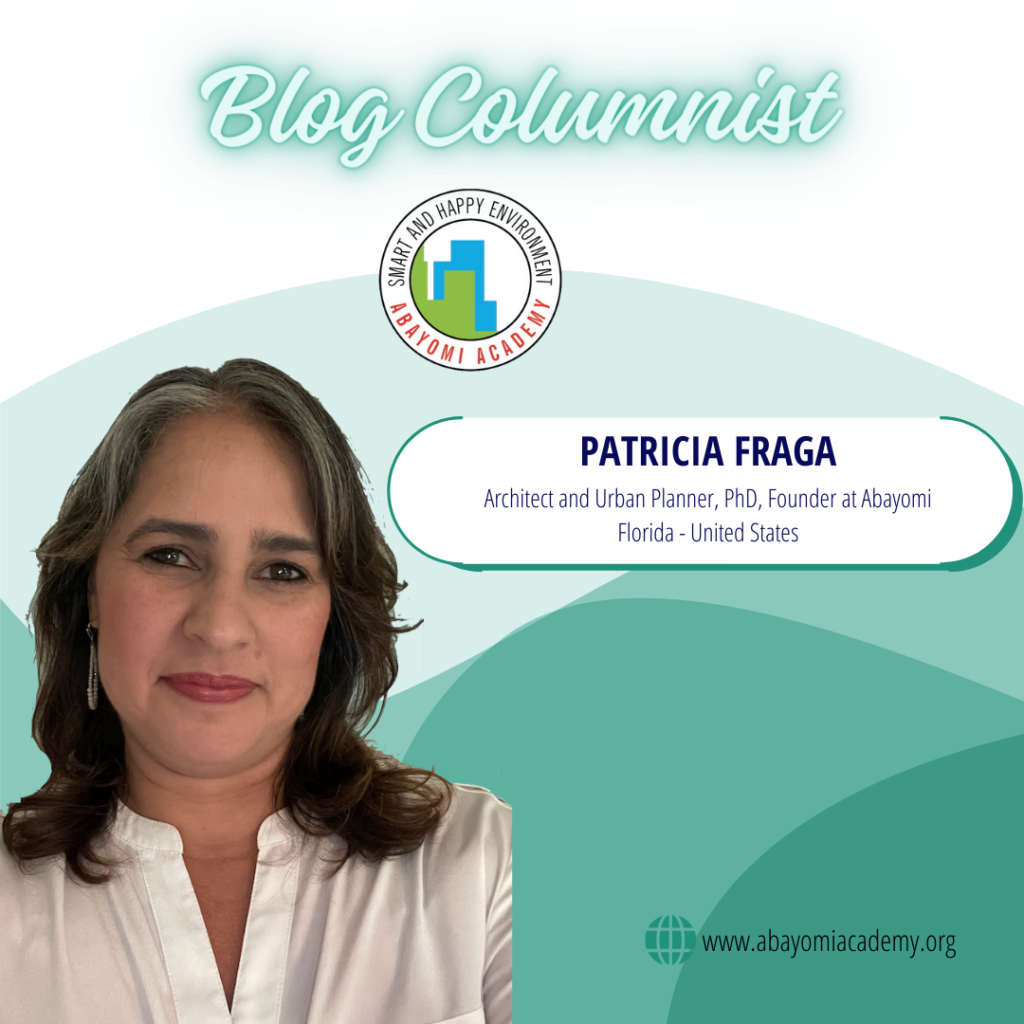
Patrícia Fraga, a visionary and dynamic professional, holds a Ph.D. in Architecture, blending her passions for sustainable urbanism, education, and technology. With a multifaceted career spanning engineering, construction, and academia, she’s the Founder and Chief Happiness Officer at Abayomi LLC and Executive Director at Abayomi Academy. Patrícia’s global influence extends through her roles as an international speaker, published author, and advocate for Smart & Happy Environments. Her commitment to cultural inclusivity shapes transformative projects worldwide, emphasizing the integration of technology with environmental responsibility. A mother of five, Patrícia’s journey reflects resilience, innovation, and a dedication to creating positive, sustainable, and joyful living spaces across the globe.
Get to know more about Dr. Fraga: Linked In Instagram

A visionary and dynamic professional, Dr. Fraga holds a PhD in Architecture and combines her passions for sustainable urbanism, education, technology, and promoting happiness. Architect and Urban Planner, PhD in Architecture and PhD/ABD in Education, with over 30 years of academic and professional experience. My work integrates smart cities, human-centered happiness, education, knowledge management, and emergency management and preparedness, connecting design, technology, and strategy to build intelligent, resilient, and sustainable environments. As a pioneer in Smart & Happy Cities, I develop frameworks that align urban planning, citizen engagement, and innovation to strengthen communities and enhance collective well-being. With expertise in AI-enhanced research, higher education development, curriculum design, and institutional planning, I contribute to more effective decision-making and future-ready organizations. I also provide consulting for institutions, professionals, and families seeking forward-thinking solutions in intelligent environments, educational innovation, resilience planning, and AI-integrated research — guided by the belief that we can only be fully happy in the collective.