By Patricia Fraga
We live in a time when cities worldwide seek solutions to become more sustainable, connected, and, above all, human-centered. But what does it truly mean for a city to be smart and happy? This year, in the Abayomi Academy blog articles, we will delve into this question, analyzing how small and medium-sized cities can transform into more prosperous and welcoming environments for their citizens.
The foundation of this discussion will be the Abayomi Methodology, an innovative model that integrates six essential pillars for building cities that promote quality of life and collective well-being. These pillars are: Conscious Citizenship, Physical and Digital Space, Innovative Management, Intelligent Communication, Human Relations, and Health and Well-being. Throughout the year, each of these aspects will be explored in different urban contexts, offering insights and applicable strategies for public managers, urban planners, and citizens who wish to transform their spaces.
The Abayomi Methodology and the Construction of Smart and Happy Cities
Conscious Citizenship places the citizen at the center of urban projects. For a city to be truly smart and happy, its inhabitants must be active in the community, participating in decision-making, monitoring public policies, and strengthening cooperation networks. When citizens are engaged, urban spaces become more inclusive and representative of the real needs of the population.
Physical and Digital Space encompasses not only urban infrastructure but also its connection with the digital world. Well-planned cities offer accessible and functional public spaces while ensuring efficient digital connectivity. The interconnection between the physical and digital environments facilitates access to services, improving mobility, communication, and social inclusion.
Innovative Management requires leaders with an open mindset, capable of understanding the specific needs of each community and seeking effective solutions. Innovation does not simply mean following technological trends but rather adopting practices that truly make sense of the local reality. The use of data, strategic planning, and transparency are fundamental for effective governance focused on collective well-being.
Intelligent Communication is an often-overlooked aspect of city administration. An efficient urban environment must ensure that its information is conveyed clearly and accessible. This includes everything from street signage to how governments communicate their projects and listen to the population’s demands. Well-structured communication strengthens civic engagement and allows for better interaction between managers and citizens.
Human Relations are fundamental to community vitality. Urban environments should be designed to foster positive connections and a culture of mutual care. This means creating spaces that encourage social interaction, dialogue, and collaboration, strengthening neighborly ties, and promoting support networks that enhance the quality of life for all.
Finally, Health and Well-being should be priorities in any urban planning. A city’s infrastructure can directly impact the physical and mental health of its inhabitants. Green areas, spaces for physical activities, access to healthcare services, and initiatives that promote quality of life are essential to ensuring that the city functions as a true ecosystem of well-being.

What to Expect in the Upcoming Chapters?
In the following articles, we will delve deeper into each of these pillars within the context of small and medium-sized cities. We will cover topics ranging from the impact of urban mobility on population well-being to how technology can be used to improve security and social inclusion. The goal is to provide a holistic and applicable vision of how to transform our urban spaces into truly smart and happy environments.
If you aspire to live in a city that values well-being and human development, this journey will be essential. Throughout the year, we will reflect together on how small changes can create significant impacts and how we can collectively build more human-centered and sustainable cities.
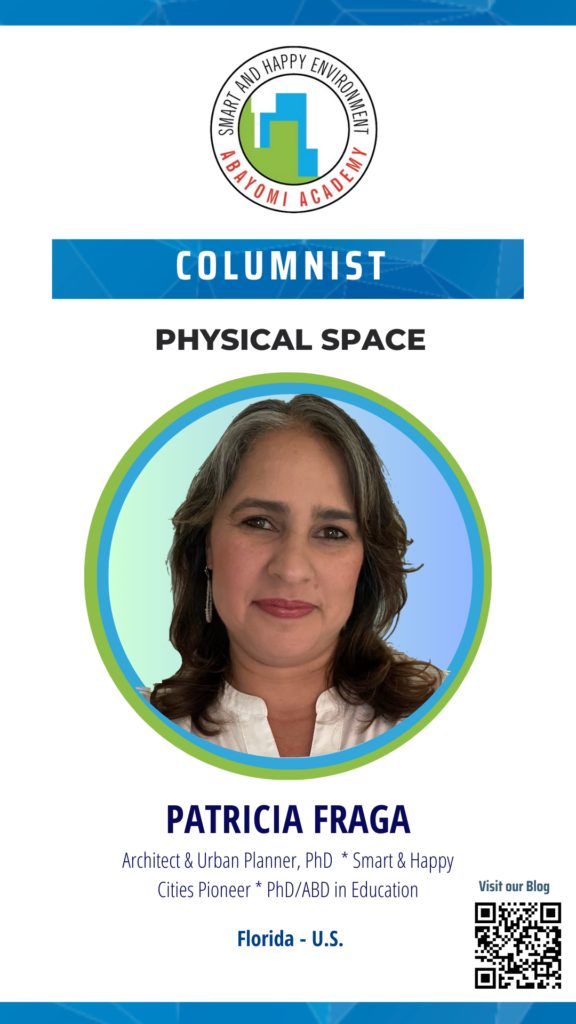
Patrícia Fraga, a visionary and dynamic professional, holds a Ph.D. in Architecture, blending her passions for sustainable urbanism, education, and technology. With a multifaceted career spanning engineering, construction, and academia, she’s the Founder and Chief Happiness Officer at Abayomi LLC and Executive Director at Abayomi Academy. Dr. Fraga’s global influence extends through her roles as an international speaker, published author, and advocate for Smart & Happy Environments. Her commitment to cultural inclusivity shapes transformative projects worldwide, emphasizing the integration of technology with environmental responsibility. A mother of five, Dr. Fraga’s journey reflects resilience, innovation, and a dedication to creating positive, sustainable, and joyful living spaces across the globe.
Follow her social media: Facebook Instagram Youtube Linked In

A visionary and dynamic professional, Dr. Fraga holds a PhD in Architecture and combines her passions for sustainable urbanism, education, technology, and promoting happiness. Architect and Urban Planner, PhD in Architecture and PhD/ABD in Education, with over 30 years of academic and professional experience. My work integrates smart cities, human-centered happiness, education, knowledge management, and emergency management and preparedness, connecting design, technology, and strategy to build intelligent, resilient, and sustainable environments. As a pioneer in Smart & Happy Cities, I develop frameworks that align urban planning, citizen engagement, and innovation to strengthen communities and enhance collective well-being. With expertise in AI-enhanced research, higher education development, curriculum design, and institutional planning, I contribute to more effective decision-making and future-ready organizations. I also provide consulting for institutions, professionals, and families seeking forward-thinking solutions in intelligent environments, educational innovation, resilience planning, and AI-integrated research — guided by the belief that we can only be fully happy in the collective.