By Beto Marcelino, chairman of the board at iCities
In recent years, we have increasingly heard about the Internet of Things, or simply IoT. For some, it may still sound like a concept restricted to tech companies or futuristic movies, but the truth is that IoT is already deeply shaping our daily lives and the future of the global economy.
We live in a world where connectivity is no longer a luxury but a necessity. Devices, sensors, and systems are communicating with each other in ways we cannot see, but with extremely tangible impacts. From smart logistics that ensure greater efficiency in food distribution, to remote patient monitoring in hospitals, to optimized energy management in cities, IoT is the backbone of a new economic era.
This transformation is not only technological; it is also cultural and social. It requires us to rethink the way we produce, consume, and manage resources. In the past, the Industrial Revolution was marked by mechanization, electricity, and later, computing. Today, we are facing an invisible revolution (but equally powerful) defined by hyperconnectivity, which seamlessly integrates the physical and digital worlds.
The great strength of IoT lies in its ability to create value from information. When data collected by sensors is analyzed and turned into knowledge, an unlimited field of possibilities opens up for fact-based decision-making. This makes the path to innovation and new business models easier to follow. I believe this is the foundation of the economy of the future: a data-driven economy, one that is guided by the realities of people’s lives.
According to a study by McKinsey & Company, the Internet of Things has the potential to generate an economic impact of between USD 3.9 trillion and USD 11.1 trillion as early as 2025. This impact comes from increased productivity, greater time savings, and more efficient use of assets.
Here, it is important to remember that technology alone is not the solution, but rather a means to create smarter and more effective solutions. The way we apply IoT is what determines its impact. That is precisely why we need strategies that put people at the center, ensuring that technological progress does not deepen inequalities but instead creates opportunities and shared prosperity. IoT can play a key role in democratizing access to healthcare, education, and quality public services, provided it is guided by principles of inclusivity and responsibility.
With this vision in mind, on September 3rd and 4th, we will host the IoT Solutions Congress Brazil in São Paulo, the largest event in Latin America dedicated to the Internet of Things and its real-world applications. Over two days, business leaders, experts, policymakers, and entrepreneurs will come together to discuss and demonstrate how IoT is already transforming entire industries and creating unprecedented opportunities for Brazil.
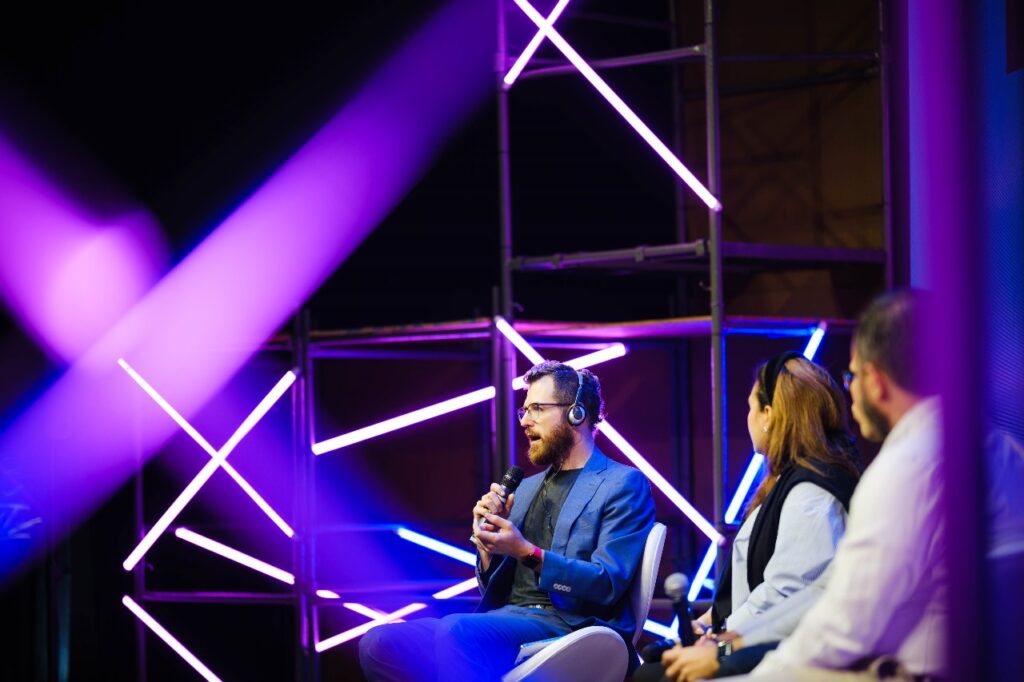
The program goes far beyond technical presentations. We will explore global trends, success stories, and most importantly, Brazil’s potential in this landscape. We have the ability to be key players in the digital economy, leveraging our diversity, creativity, and capacity to innovate even in the face of challenges. But to achieve this, collaboration between the public sector, private initiatives, and civil society is essential.
The future of the economy will not be about technology alone, but about connections, those between machines, between data, and, most importantly, between people. Events like the IoT Solutions Congress Brazil are privileged spaces where these bonds can be forged, strengthened, and transformed into concrete action.
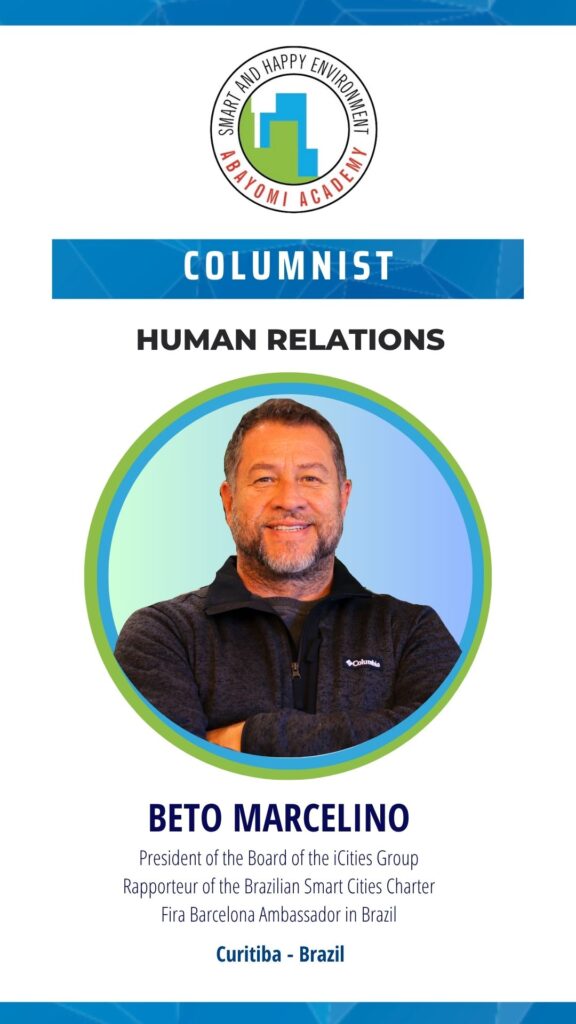
Beto Marcelino serves as Chairman of the Board for iCities Group and is the co-founder of the Brazilian holding company, a benchmark in the urban innovation and smart cities ecosystem. As a pioneering agent in this field, he was one of the rapporteurs for the Brazilian Charter of Smart Cities, an initiative by the Ministry of Cities, and also participated in the Cities 4.0 program, from the Ministry of Science, Technology and Innovations (MCTI), contributing to the construction of the National Policy for Smart Cities.
He holds a degree in Agronomic Engineering from the Federal University of Paraná (UFPR), with a specialization in smart cities from Smart City Expert, and an MBA in Marketing from FAE Business School. He is also an ambassador for Fira Barcelona in Brazil, strengthening the connection between global events and the Brazilian urban context.
Social Media:
Instagram: Instagram Instagram
LinkedIn: Beto Marcelino