By Beto Marcelino, chairman of the board at iCities
We are living in a time when the impacts of climate change have ceased to be a distant forecast and have become a reality discussed in our daily lives. Heavy rainfall, record-breaking heat waves, and water crises are now part of the news, and more than that, they directly affect the lives of millions of Brazilians. In this context, there is no longer any doubt: cities are on the front line of the impacts of climate challenges, but they also play a fundamental role in addressing them. It is in urban territories that climate effects manifest themselves most intensely and unequally, yet it is also there that the greatest potential for transformation lies.
Cities are living ecosystems, shaped by people, flows, and histories. For this reason, they must be understood as strategic actors in building climate resilience. It is not enough to react to natural disasters only when they occur; it is necessary to anticipate them to develop contingency, adaptation, and prevention plans. Urban resilience is not just about resistance, but about the ability to reinvent, learn from crises, and create sustainable and integrated solutions.
In Brazil, inspiring examples are beginning to take shape. Cities such as Curitiba, Niterói, and Recife have stood out for incorporating the climate agenda into their public policies. Niterói, for example, already has a Municipal Climate Adaptation Plan that combines green infrastructure, reforestation, and environmental education. In Curitiba, sustainable mobility initiatives, such as the Caminhar Melhor program, and legislative efforts to expand green areas reinforce a vision of a smart, sustainable, and human-centered city. Since 2019, Curitiba has added nearly 30 kilometers of new green areas, generating shade, improving air quality, and increasing thermal comfort across several neighborhoods.
In other parts of the world, cities’ commitment is also growing stronger. Copenhagen aims to become the world’s first carbon-neutral capital as early as this year, and Rotterdam, in the Netherlands, has become a reference in adaptation solutions with its innovative system of creating multifunctional spaces that combine urban drainage and leisure. These are just a few examples of cities that demonstrate, in practice, that governance, innovation, and social engagement are the pillars of a new urban culture focused on sustainability.
Building this agenda requires, above all, political commitment. We need new forms of leadership. Leaders who act with purpose and make strategic use of innovation, municipal leaders play a key role: they are the ones who understand the challenges and potential of their territories and who can translate the global climate agenda into concrete local actions that truly impact people’s lives.
That is why urban climate resilience will be part of the discussions at Smart City Expo Curitiba 2026. The event, which has grown year after year, will serve as a space for dialogue and inspiration for public managers, companies, researchers, and citizens committed to the future of cities. And for those who are already making a difference, registrations for the Smart City Expo Curitiba Brazilian Awards 2026 are now open. It is an opportunity to give visibility to the good practices that are already transforming Brazil.
After all, we know that initiatives created in cities often become true showcases for the future we build every day. And if we want that future to be sustainable, inclusive, and resilient, we must start now by strengthening those on the front lines, connecting knowledge, and inspiring actions that make tomorrow more sustainable, smarter, and more human.
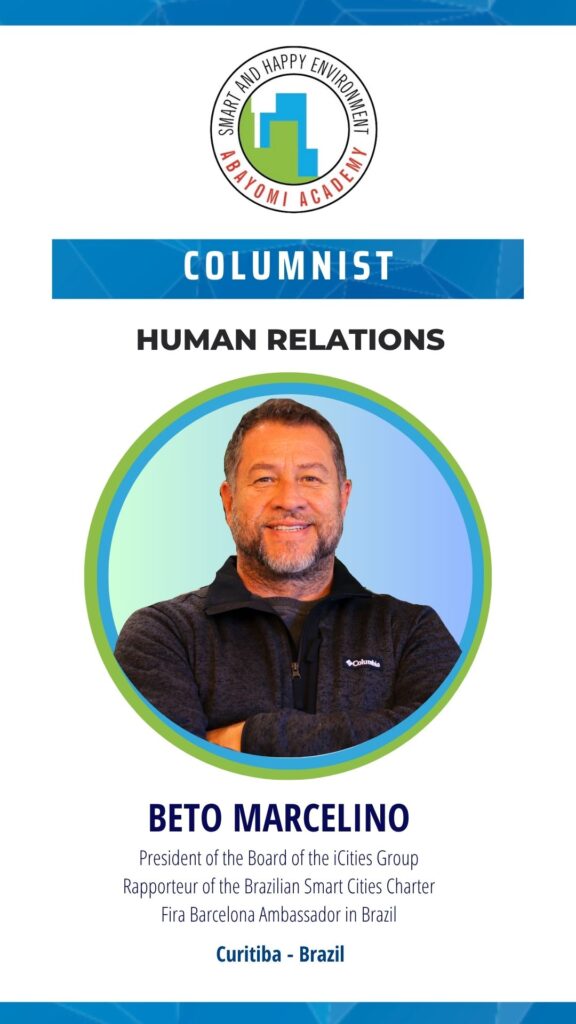
Beto Marcelino serves as Chairman of the Board for iCities Group and is the co-founder of the Brazilian holding company, a benchmark in the urban innovation and smart cities ecosystem. As a pioneering agent in this field, he was one of the rapporteurs for the Brazilian Charter of Smart Cities, an initiative by the Ministry of Cities, and also participated in the Cities 4.0 program, from the Ministry of Science, Technology, and Innovations (MCTI), contributing to the construction of the National Policy for Smart Cities.
He holds a degree in Agronomic Engineering from the Federal University of Paraná (UFPR), with a specialization in smart cities from Smart City Expert, and an MBA in Marketing from FAE Business School. He is also an ambassador for Fira Barcelona in Brazil, strengthening the connection between global events and the Brazilian urban context.
Social Media:
Instagram: Instagram Instagram
LinkedIn: Beto Marcelino