By Alessandro Lopes
Cities have always been places of encounter and confrontation, where plurality finds its stage.
From the Greek agora to colonial squares, from African markets to European boulevards, public space has been the beating heart of urban life. Today, that heart also pulses in the digital realm: feeds, hashtags, and timelines have become the new square, simultaneously universal and fragmented. What begins as a local whisper can resound as a planetary shout, and a single lie can cross borders and corrode democracies in minutes.
It is in this territory that the urgency for regulation emerges. To regulate is not to silence; it is to protect.
To protect the public sphere from invisible manipulations, from algorithms that amplify hatred, from misinformation that poisons the social fabric. These political safeguards are not barriers to freedom, but roots that sustain it. Just as cities need master plans to grow with justice, the digital space requires norms that preserve coexistence and collective integrity.
The challenge, however, is unprecedented. Disinformation does not ask for visas, extremist speeches do not pass through customs, and digital platforms no longer recognize national sovereignty. We live in a paradox: while our physical borders are consolidated, our geopolitical divisions in the digital realm still need to be created. It is as if we inhabit another world, a new territory, without universal treaties, without defined lines, where we are still searching for maps. Today, sovereignty is also measured by who controls submarine cables, data centers, and algorithms. Diplomacy is no longer limited to embassies but plays out in the invisible arenas of information.
Therefore, it is not enough for each country to legislate in isolation. We need a multilateral architecture that recognizes the digital sphere as an extension of the global public space. Algorithmic transparency, protection of vulnerable groups, and digital civic education: these are the pillars of a new international policy, capable of balancing freedom with responsibility, innovation with equity, cultural diversity with universal rights. Without them, any attempt will dissolve like foam before the transnational force of the networks.
Failing to consider the future of cities without taking their networks into account is a mistake of scale. The urban is no longer only concrete: it is also fiber, wave, and flow. If we seek sustainable, intelligent, and humane cities, we must also seek social networks supported by policies of care, capable of transforming the digital space into a legitimate extension of the public sphere.
These safeguards are the new digital urbanism: planting trees in algorithmic asphalt, opening clearings amid bubbles, creating virtual squares where difference is not a threat but an encounter. The question before us is simple, yet decisive: do we want to live in fragile digital squares, subject to storms of hatred and manipulation, or in digital squares that are protected, open, and fertile for shared futures?
The answer will define not only the destiny of the internet, it will define the destiny of the cities themselves, and with them, the destiny of humanity.
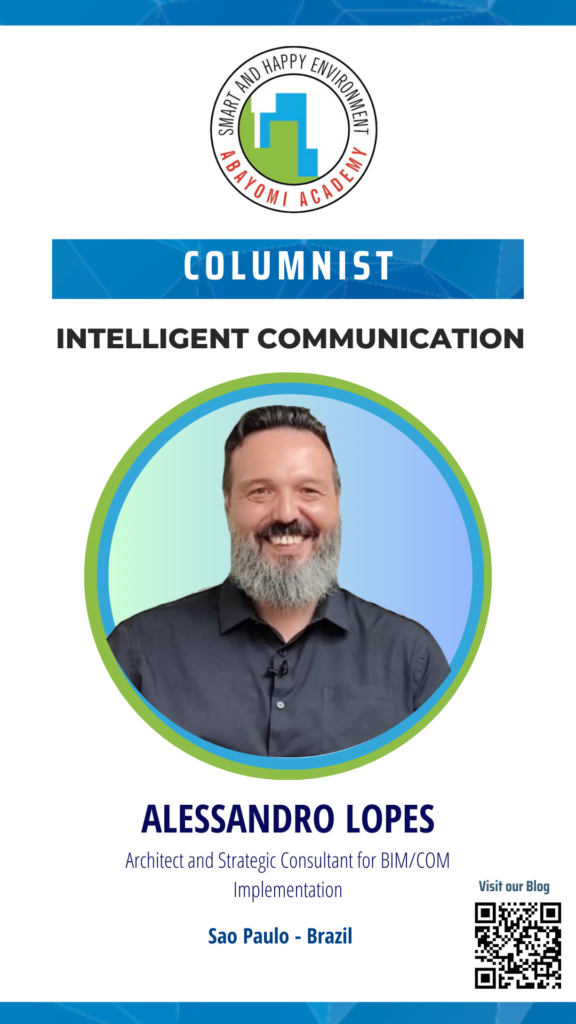
Alessandro Lopes is an architect and consultant in BIM/CIM and Smart Cities, with a master’s degree in Environmental Law from UNISANTOS, focusing on Creative and Sustainable Cities. He serves as an Advisor at the Municipality of Santos, leading urban revitalization and sustainability projects, and as Coordinator of the Architecture and Urbanism Program at ESAMC Santos, bridging education, market, and innovation. A specialist in project management and sustainability, he is a CBIM member, speaker, and commentator on radio and podcasts about innovation in civil construction. His key contributions include the modernization of Santos’ waterfront and the restructuring of the public administration’s quality and control sector.
Get to know more about him: Facebook. Instagram. LinkedIn