By Dr. Basma Abdelrahman Gbr
The transition of architecture from a mere rigid building to a living organism does not represent only a technological development but also a philosophical transformation that redefines the relationship between the building and man, as architecture in the twenty-first century is no longer just walls and ceilings that protect man from the elements of nature, but has become an intelligent system that interacts with its users, responds to the environment and adapts to the passage of time, as the building has become capable of sensing, analyzing, and making decisions.
This transformation forces architects and designers to rethink the concept of design itself, and here the question arises: are what we produce only beautiful and functional buildings or a living system that shares human life with them to become an architectural entity that interacts, learns, and predicts? Today, we are witnessing a qualitative transition from architecture to rigid building to architecture as a living system, a system that possesses digital nerves, intelligent skin, data memory, and the ability to adapt continuously.
The concept of living architecture emerged in the context of the intersection between biology, architecture and digital technology, and the term living architecture refers to buildings that have the ability to dynamically interact with their surroundings through intelligent systems that respond to environmental factors such as light, heat, humidity and usage patterns, and this concept is related to the development of the following fields:
- Internet of Things (IoT)
- Smart Building Management Systems (BMS)
- Artificial Intelligence
- Adaptive Materials
Kellert. et al. (2011) have pointed out that this architectural orientation reflects the transition of architecture from mechanical thinking to biological thinking inspired by nature and the emergence of the term biophilic design, confirming that human beings interact physiologically and psychologically with environments that mimic natural systems.
Also, the analogy of the building and its description of the nervous system of the organism appeared, so it became intelligent, as the sensors work like nerves while the CPUs play the role of the brain, and these systems include temperature and motion sensors, lighting and smart ventilation control systems, and energy management systems that analyze data through machine learning algorithms to make decisions. .According to the International Energy Agency (2017) report, these systems can reduce energy consumption by up to 30%.
Smart materials have become a pivotal element in the transformation of the building into an adaptive interactive entity that can change its physical properties according to the surrounding conditions, such as electrochromic glass, which changes its transparency according to solar radiation, self-healing concrete, and thermodynamic materials that regulate heat.
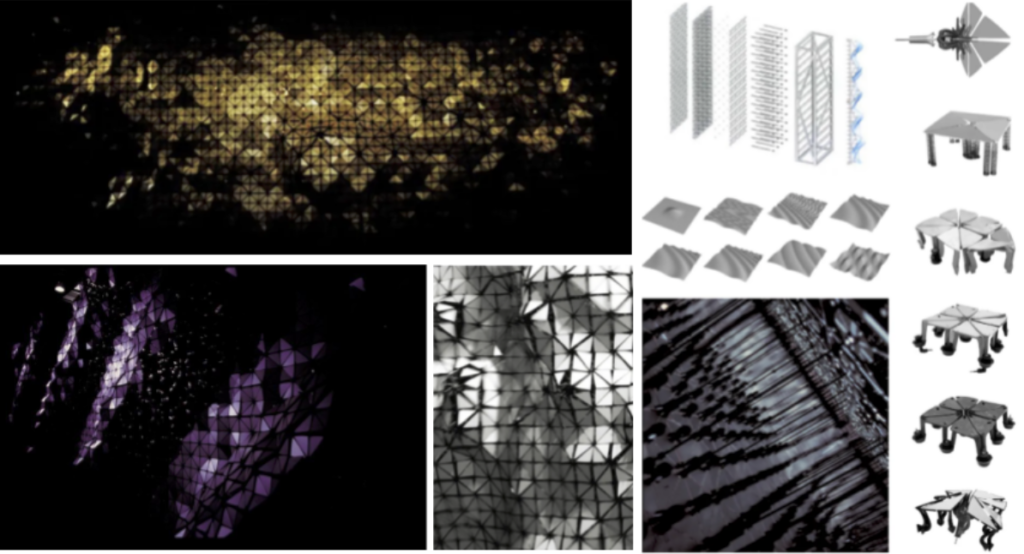
Figure 1 ‘Hypo surface’ installation combines position sensors with conventional actuators to create a responsive surface. Images courtesy of Mark Goulthorpe and DeCOI Architects
Thus, the relationship between the user and the building is no longer one-way, but has become interactive, as the building today reads the user’s behavior and modifies its internal environment accordingly, such as adjusting the lighting according to the mood, adjusting the temperature according to the activity, and adaptive sound systems (Figure 1).
Today, architects are using artificial intelligence techniques not only to simulate performance but also to predict the future behavior of the building, where a live virtual digital model of the building is created that is constantly updated with real data, which is known as a Digital Twin (Figure 2), and here the building becomes able to anticipate problems instead of waiting for them.

Figure 2 explains the concept of a digital twin, which is a digital replica of a built asset or environment
Resource (https://www.autodesk.com/design-make/articles/what-is-a-digital-twin?us_oa=dotcom-us&us_si=13b619e4-fc18-4d4a-9567-41e9cd9d6f79&us_st=twin%20digital)
Through reading in the Arab context and contemplating traditional Arab architecture, we find that it was alive before the advent of digital technology, as the interior courtyards organized the climate, and the mashrabiyyas controlled lightools(Figure, while the air towers directed the wind and the challenge today is not only to import technology, but also to reinterpret this historical environmental intelligence through modern digital tools( Figure 3).
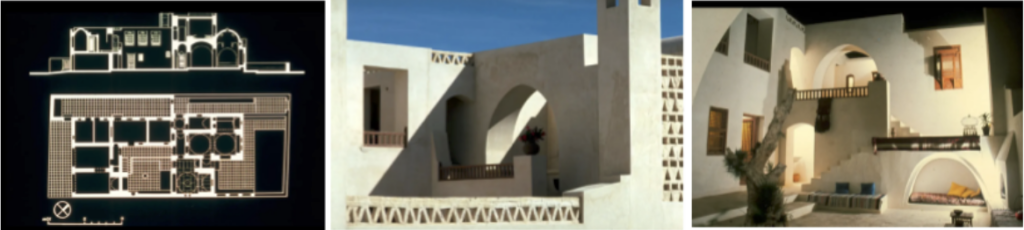
Figure 3. The walls and roof are designed to provide insulation, sunlight filters through mashrabiyyas, and the courtyard draws fresh sea air down through the wind catch. (Halawa House. (2024, December 5). Aga Khan Development Network. https://the.akdn/en/how-we-work/our-agencies/aga-khan-trust-culture/akaa/halawa-house)
The transformation of a building into a living entity is not only a technical achievement but also imposes a moral responsibility on the architect. How do we protect privacy? How do we balance automation and humanity? Today’s architect is no longer just a designer of shapes, but an architect of integrated life systems that combine technology, culture, the environment, and humans.