By Dr. Malihe Taghipour
What if the way a classroom is designed could shape how students think? Today, this question is at the heart of a growing movement in education: rethinking learning environments to spark creativity, collaboration, and well-being.
For decades, many classrooms have followed an outdated model: rows of desks, a teacher at the front, and one-size-fits-all instruction. But as learning needs evolve, educators and architects are asking: How can we design spaces that nurture diverse minds and inspire deeper learning?
From Rows to Collaboration: The Evolution of Educational Spaces
Historically, classrooms mimicked factories—rigid and uniform, prioritizing control over creativity. But modern learning theories, especially constructivism, argue that students learn best through active exploration and hands-on engagement. This shift has led to flexible learning spaces: think open layouts, mobile furniture, and zones for group work, quiet reflection, and creative expression.
COVID-19 accelerated this shift even further. Schools worldwide had to pivot to digital and hybrid models, highlighting the importance of adaptable, tech-integrated environments. As a result, schools began experimenting with concepts like the “campfire, cave, and watering hole”—a metaphor for creating spaces for storytelling, quiet focus, and collaboration.
Why Space Matters: Cognition, Creativity, and Inclusion
Spatial dynamics—the relationship between space and learning—goes beyond aesthetics. Research shows that the way a room is arranged can impact attention, engagement, and even memory. For instance, circular seating fosters discussion; nature-inspired design reduces stress; and adjustable lighting or ergonomic furniture can improve comfort and focus.
Yet, it’s crucial to acknowledge: space is not neutral. Design choices can unintentionally exclude certain groups. This is why inclusive design—spaces that consider different learning styles, abilities, and cultural backgrounds—is essential for equity in education.
Technology & Creativity: Allies, Not Replacements
Integrating technology into learning spaces isn’t about replacing human interaction—it’s about enhancing it. Interactive whiteboards, virtual reality tools, and digital creative platforms can enrich the learning experience when used thoughtfully. They open the door to project-based learning, where students design, build, and solve real-world problems.
Pairing this with arts integration—blending science with storytelling, coding with creativity—helps develop well-rounded learners who think critically and express themselves confidently.
Designing with Purpose: A Call for Collaboration
As we move toward smarter, more human-centered educational environments, collaboration becomes key. Architects, educators, students, and community members must co-create spaces that reflect shared values and support the emotional, social, and intellectual needs of learners.
The future of learning isn’t just digital—it’s dynamic, inclusive, and intentional. At Abayomi Academy, we believe in creating environments that do more than teach facts—they spark joy, curiosity, and community.
Want to learn more about how educational space design shapes learning? Stay connected with the Abayomi Academy blog and Dr. Malihe Taghipour’s articles.
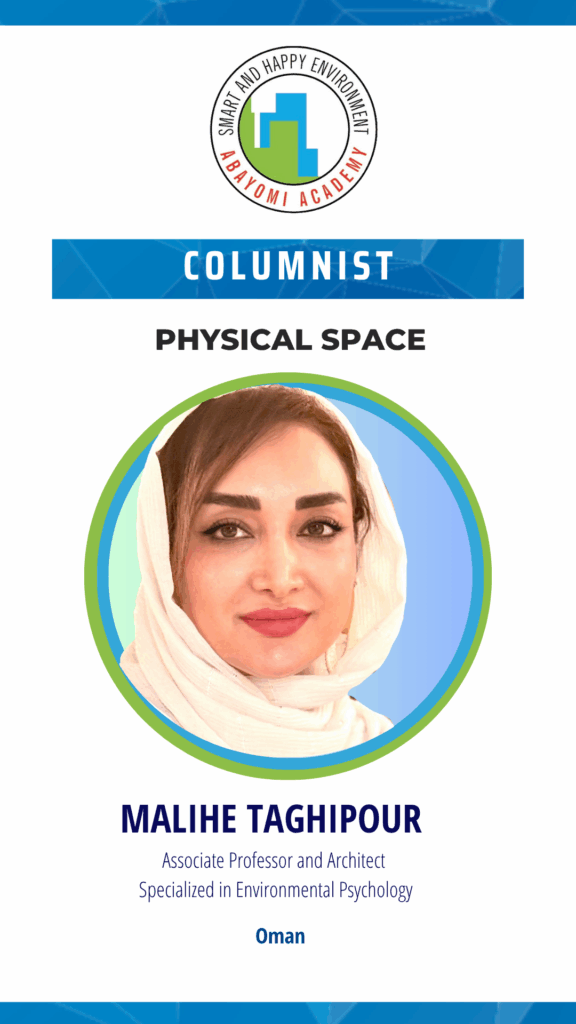
Dr. Malihe Taghipour is an associate professor of architecture with over 15 years of experience in design and academia. She specializes in environmental psychology, focusing on how spatial design fosters social interaction. Her research explores how spaces can strengthen connections between people and their environment. Recently, she has incorporated energy efficiency into her studies, examining how sustainability influences human perception. By integrating social and environmental concerns, her work aligns with Abayomi Academy’s mission to promote innovative, human-centered, and sustainable architectural solutions.
Get to know more about her: LinkedIn