By Dr. Lamiaa Adel Shaheen
Walk into a room, and something happens before a word is spoken. The light, the materials, the proportions, even the sound of your footsteps against the floor, we work, learn, heal, and live. For centuries, architects have understood that space is a silent storyteller. A soaring cathedral inspires awe. A sunlit classroom fosters learning. A cramped office breeds fatigue. Today, as our lives become increasingly hybrid, split between the digital and physical world, the design of our surroundings has never mattered more.
Architecture: The Old Art with New Demands
Architecture has always been about more than walls and roofs. It is about creating environments that reflect values, culture, and aspirations. In today’s cities, this responsibility is even greater. Urban populations are growing, sustainability is no longer optional, and communities are asking: Can our spaces do more than shelter us?
Biophilic design, integrating natural elements into the built environment, has shown how deeply humans crave a connection with nature. Green walls in hospitals improve recovery rates. Daylight in offices boosts productivity. In many ways, architecture is returning to an ancient wisdom: space should serve human well-being, not just function.
The Rise of AI and Digital Innovation
But innovation is adding new layers to this story. Artificial intelligence and emerging technologies are now influencing how we design, use, and even experience space.
- AI in Design: Algorithms can analyze data from climate to traffic patterns to suggest sustainable building forms and efficient layouts. Imagine an AI co-designer that tests hundreds of design options in minutes, helping architects make smarter choices.
- Smart Spaces: Sensors and IoT allow buildings to “respond” to human needs. Lights that dim when natural daylight is sufficient, air systems that adapt to occupancy, or furniture that remembers ergonomic settings.
- Virtual and Augmented Reality: Before construction begins, designers and clients can “walk through” projects in immersive VR, adjusting scale, texture, and flow in real time.
Far from replacing architects, these tools expand human imagination. They give us the power to simulate, test, and refine, turning architecture into a collaborative dialogue between creativity and computation.

Why This Matters
Physical space is no longer just a backdrop. It is a platform for innovation. A classroom infused with natural light, flexible layouts, and digital learning tools doesn’t just house education; it amplifies it. A hospital designed with calming textures, adaptive lighting, and AI-driven patient flow doesn’t just treat, it heals smarter.
For interior designers and architects, the challenge is to stay rooted in the timeless truths of human comfort and dignity while embracing new tools that push boundaries. The question is not whether we should integrate AI and innovation into space-making, it is how to do it responsibly, creatively, and inclusively.
Looking Ahead
The future of physical space is hybrid: part material, part digital; part human intuition, part machine intelligence. But the essence remains unchanged, spaces shape people, and people shape spaces.
As we stand at this intersection of architecture and innovation, one truth is clear: the walls around us are never silent. They whisper possibilities, reflect our values, and, with the help of technology, they may soon speak in entirely new ways.
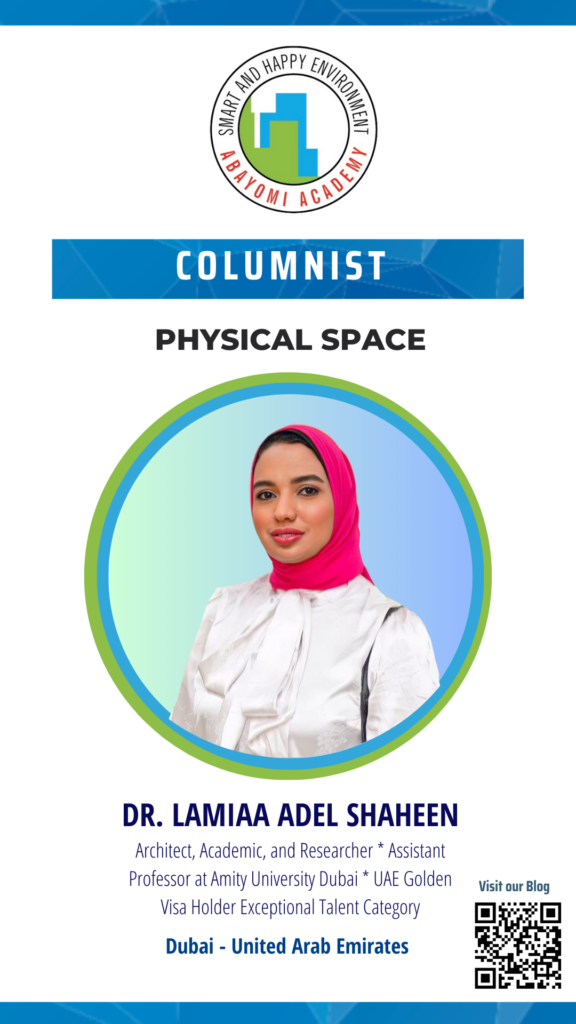
Dr. Lamiaa Adel Shaheen is an accomplished Architect, Academic, and Researcher. Her expertise in the field has been recognized internationally, as evidenced by her prestigious UAE Golden Visa in the “Qualified professionals and Exceptional Talents” Category also recognized as Columnist 2024 Abayomi Academy, and Ambassador of Quality of Life UAE 2024, got 2nd place in the Abayomi Academy international Award for Physical space category 2024. With a Ph.D. in Architecture, she has dedicated her career to pushing the boundaries of Design and Innovation. Currently, Dr. Lamiaa serves as an Assistant Professor at Amity University Dubai, specializing in the Architecture and Interior Design Department. With a Focus on Sustainable Design and Human-Centric Spaces, Dr. Lamiaa continues to make a significant impact in the world of Architecture and Interior Design.
Get to know more about her: LinkedIn