By Alessandro Lopes
Every city is a living being. It breathes to the rhythm of its inhabitants, bearing scars and smiles etched into its walls, speaking through the echoes of voices that once filled its streets. And if we pause for just a moment, we will see that it watches us too, silent, waiting for us to truly listen.
To reimagine the urban fabric is an act of reconciliation. It is to accept that the past is not a perfect portrait, but a map drawn in light and shadow. As we walk along weathered streets, as we touch the stone polished by time, we realize that memory is not an anchor. It is a compass. It does not hold us down; it guides us toward what is worth carrying forward.
This attentive listening has already inspired projects across the globe. In Copenhagen, the Superkilen Park gathers objects and symbols from over sixty countries, chosen by residents themselves, forming a multicultural mosaic that radiates belonging. In New York, the Yellow Arrow project invited passersby to uncover hidden stories embedded in the city, connecting people to invisible memories.
Emotional Intelligence in communication is the language that makes this dialogue possible. It unites the precision of strategy with the warmth of feeling, transforming memories into bridges rather than barriers. It is the gesture that senses the murmur of a square, the scent of coffee at dawn, the laughter spilling from a window, and translates all of it into actions that renew the present without erasing history. This is what the collective The Urban Conga, in the United States, achieved by creating interactive furniture that sparks unexpected encounters and rekindles the simple joy of play in the urban landscape.
In today’s world, where cities compete for attention like hurried shop windows, the true strength lies in what cannot be copied: the soul that inhabits the everyday. It is what gives a neighborhood in Barcelona the same truth as an alleyway in Salvador, or an ancient street in Kyoto. This very soul was captured in the Chatty Maps project, which mapped sounds and emotions to understand how urban spaces deeply influence the moods and well-being of their residents.
When this listening is lost, the city loses its light. Squares become nothing more than transit zones, corners stop holding stories, and concrete, once alive, grows cold and indifferent. To listen to the city is more than urban planning: it is to preserve the memory that keeps it alive. Recent studies, such as research in Tehran on emotional mapping and collective memory, show that recording perceptions like pride, vitality, and peace can help design spaces that nurture a sense of belonging.
When a city speaks and is heard with clarity and affection, it ceases to be just a collection of buildings. It becomes a living organism, capable of giving people back the feeling of being alive. And in that moment, we understand that caring for the city is also caring for ourselves. For in truth, every street is a line in our own breath. And without that breath, neither we nor the city can continue to live.
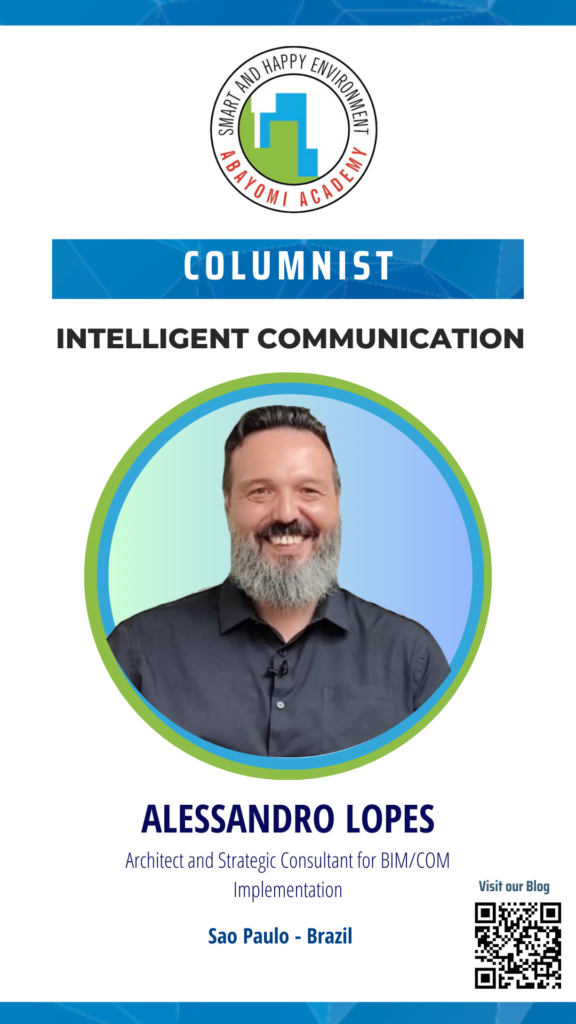
Alessandro Lopes is an architect and consultant in BIM/CIM and Smart Cities, with a master’s degree in Environmental Law from UNISANTOS, focusing on Creative and Sustainable Cities. He serves as an Advisor at the Municipality of Santos, leading urban revitalization and sustainability projects, and as Coordinator of the Architecture and Urbanism Program at ESAMC Santos, bridging education, market, and innovation. A specialist in project management and sustainability, he is a CBIM member, speaker, and commentator on radio and podcasts about innovation in civil construction. His key contributions include the modernization of Santos’ waterfront and restructuring of the public administration’s quality and control sector.
Get to know more about him: Facebook. Instagram. LinkedIn