By Dan Stachofsky
Picture a pleasant summer morning one hundred years ago. You woke early and watched the sunrise while sitting quietly with your bare feet on the soil. As the sun rose, the birds began to sing, and butterflies and hummingbirds began filling the air. Filled with joy and a sense of inner peace, you practiced breathing exercises for a few minutes before standing slowly, stretching, and, with purpose, entering into the rest of your day.
Now, picture a pleasant summer morning today. You wake late, almost feeling more tired than when you went to sleep. You want to watch the sunrise, but after a night of tossing and turning, getting another thirty minutes of sleep seems better. Now that you’re up, you feel the pressure of ‘being behind already’, so you grab a quick breakfast and coffee, and run into the rest of the day, hoping nothing major happened on the global stage that will interfere with the deadlines awaiting you in the office.
Sure, these are hypotheticals, but are they that uncommon? In my business, it seems I speak with someone every day who is frustrated with their sleep and inability to get the rest they wish they could. There is a sense of frantic frenzy that fills most waking moments, and anxiety keeps many from peaceful, deep, restful sleep. What’s changed that’s preventing us from getting the rest we need and having the sustained energy throughout the day?
A recent analysis shows that roughly one-third of Americans are sleep deprived, meaning they get less than 7 hours of sleep per night and struggle to fall asleep quickly, and one out of five report being sleepy during the day. The CDC agrees, and reports Americans are not getting enough sleep. Helpguide.org says poor quality sleep may negatively affect mental health, cellular repair and rejuvenation, cognitive function (such as memory), and increase the risk of heart disease and diabetes. Worldwide, lack of sleep is considered a public health epidemic because sleep is so fundamental to our health.
Certain habits contribute to poor sleep, such as eating sugary foods or eating right before bed, watching the news before bed, scrolling on social media, or working late. Environmentally, if your room is not dark enough or if you sleep with your cell phone in your bed or next to you can cause sleeplessness or light sleeping.
What’s Your Mobile Phone Got to Do With It?
A 2022 study published by the National Institute for Health found that a higher use of mobile phones was significantly associated with poor sleep quality. Given the role mobile phones play in our lives today, this is a significant finding.
Mobile phones, especially smartphones, emit both radio frequency electromagnetic fields (EMF) and blue light, a form of light that wreaks havoc on the endocrine system and hypothalamus. The same is true for tablets and computers. Blue light from screens tricks our body clock into thinking it’s daytime, which affects the release of melatonin and increases the cortisol levels in the body. This combination is a risk to getting your best sleep. EMFs from modern devices increase voltage across cell membranes, triggering biological changes that disrupt sleep and health. One mechanism is by activating the voltage-gated calcium channels (VGCC) that then release an overabundance of calcium ions into the cell. This leads to oxidative stress, inflammation, and disease. Along the way, the stress causes mitochondria to malfunction, producing free radicals at a rate the body can’t naturally handle, overwhelming the autonomic nervous system. The symptoms commonly associated with these disruptions are anxiety, sleeplessness, headaches, brain fog, illness, memory challenges, skin irritation, tinnitus, anger, and uncontrolled fear.
Practical EMF Hygiene for Better Sleep
The silent nature of EMF and blue light appears innocent. The data, however, says otherwise. It’s important to practice good EMF hygiene. This includes:
- Placing mobile phones in airplane mode when not actively using them
- Using ethernet cable connections whenever possible. Ethernet adapters are available for phones and tablets.
- Turning WiFi off at night. Most WiFi routers have scheduling settings that will automatically turn the signal off and on at set times. Alternatively, using a plug with a timer works well.
- Stop using mobile or wireless devices at least 60 minutes before bed.
- Charge mobile devices at least 10 feet away from where you sleep, preferably in a separate room.
- Grounding daily – the practice of walking barefoot on the ground or hugging a tree daily
- Sungazing – watching the sunrise for 15 minutes before sunrise and 15 minutes after sunrise. The full spectrum wavelengths of sunlight at this time of day are very healing, and trigger natural melatonin production that will be used that evening when falling asleep.
- Increase connection with God. Meditation and prayer prior to falling asleep are effective practices to improve the quality of sleep and reduce anxiety, fear, and anger.
- Use products that harmonize EMF, protecting the body from the harmful effects of electromagnetic frequencies.
These EMF hygiene steps may dramatically improve sleep and restore vibrant health.
In today’s world, restoring health requires a multi-dimensional approach – body, mind, and spirit. Eating well, thinking well, moving well, and praying well are equally important and, while not the focus of this article, should not be ignored. What I find, both in practice and in discussion with health experts over the past several years, is that the rise of the invisible EMF levels is making it harder to connect with God, others, and nature. EMF protection is essential. Think of it as a tool one would use to give more leverage when lifting something very heavy. Devices can greatly assist the body during this time to help the body restore balance and health, helping one achieve their very best day and getting that beautiful, deep, restorative sleep our bodies crave.
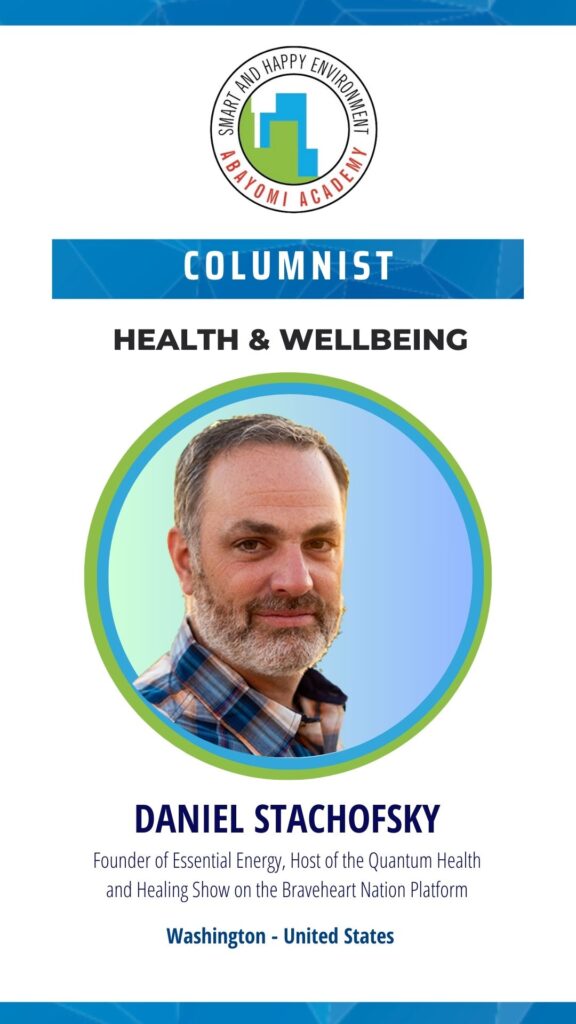
Fueled by a passion for whole-life wellness and a drive to confront invisible environmental threats that harm us without consent, Dan Stachofsky, founder of Essential Energy, is on a mission to better a billion lives with structured, beneficial photonic therapy. Inspired by his daughter Jane’s health struggles, Dan champions a novel light technology that raises energy, improves bioresonance and mitigates stress from EMFs, junk light, and other environmental stressors, protecting cellular health and supporting enlightenment, longevity, and health. Today, Essential Energy’s groundbreaking devices are used worldwide, supporting individuals, parents, pet owners, and farmers. Essential Energy’s devices scale to support entire ecosystems against the widespread effects of EMFs and other modern environmental stressors that, until now, were left unchecked.
Social media: Facebook. Instagram. Youtube. Linked In