By Patricia Fraga
When we think about communication, it is common to associate it only with speech or writing. However, in smart and happy environments, communication goes far beyond words. It is present in everything that surrounds us: in the spaces we inhabit, the cities we move through every day, and in environments of work, education, health, and leisure. Communicating intelligently means consciously using all available resources to convey clear, welcoming messages that are coherent with the values and purposes of both the environment and the people who use it.
Within the Abayomi Methodology, Intelligent Communication is an essential pillar, as it connects and strengthens all the others: conscious citizenship, innovative management, human relationships, physical and digital environments, and health and well-being. An environment that communicates well guides, includes, welcomes, and fosters a sense of belonging.
Verbal communication, both spoken and written, is only one part of this process. Nonverbal communication, in turn, occurs continuously and often unconsciously. The way a space is organized, lit, signposted, and decorated communicates even before any direct interaction takes place. When entering an environment, we quickly perceive whether we are in a hospital, a school, a restaurant, or a cultural space. This immediate understanding is the result of well-designed spatial communication.
Urban design and landscape also communicate. Well-signposted streets, accessible sidewalks, inviting public squares, well-maintained green areas, and public spaces that encourage encounters convey messages of care, safety, and belonging. Likewise, confusing, poorly lit, or inadequately signposted environments communicate disorganization, insecurity, and exclusion. In cities and organizations, communicating well means making people’s lives easier and contributing to well-being and happiness.
Visual communication, through signage, graphic design, colors, materials, and visual identity, is another fundamental layer. Clear signage, accessible information, and inclusive visual language reduce barriers, increase user autonomy, and promote a smoother experience. A smart environment does not force people to constantly ask for information; it guides them naturally.
In the contemporary context, digital communication expands these possibilities but does not replace the physical experience. Smart and happy environments understand that digital tools should complement, not substitute, in-person experiences. A well-communicated space provides physical, on-site information while also offering digital resources for those who wish to plan, explore further information, or access services remotely. This complementarity ensures inclusion and efficiency.
Making intelligent use of available resources (financial, material, human, and technological) is one of the core principles of Intelligent Communication. Communicating well does not mean investing more, but investing better and paying attention to people’s real needs within these environments. Often, small changes in layout, signage, or spatial organization generate profound impacts on people’s experiences. Using resources consciously means respecting the environment, the people, and the context in which they exist.
Intelligent Communication also strengthens human relationships. Environments that communicate welcome, clarity, and respect encourage more positive interactions, reduce conflict, and foster cooperation. For managers, understanding this pillar is essential: leadership is also communication, not only through speeches, but through spatial, organizational, and cultural choices that shape people’s daily lives.
Within the Abayomi Methodology, communicating intelligently is an act of collective responsibility. It means understanding that every environment, every detail, and every decision communicates something. When this communication is designed in a conscious, systemic, and human-centered way, we create spaces that not only function better but also promote well-being, belonging, and happiness.
Smart and happy environments are, above all, environments that know how to communicate, with clarity, sensitivity, and purpose.
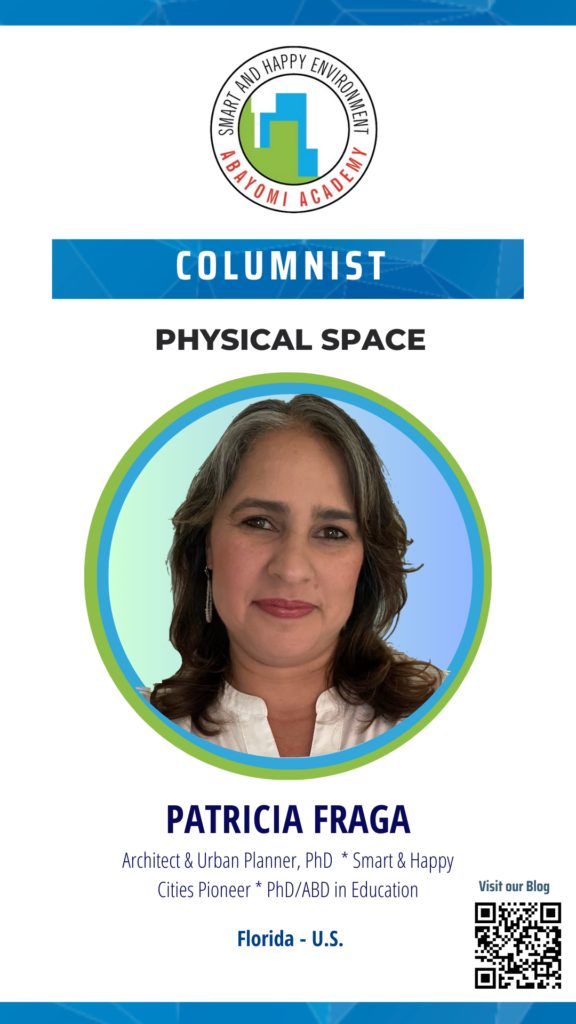
Patrícia Fraga, a visionary and dynamic professional, holds a Ph.D. in Architecture, blending her passions for sustainable urbanism, education, and technology. With a multifaceted career spanning engineering, construction, and academia, she is the Founder of Abayomi and the Executive Director of Abayomi Academy. Patrícia’s global influence extends through her roles as an international speaker, published author, and advocate for Smart & Happy Environments. Her commitment to cultural inclusion shapes transformative projects worldwide, emphasizing the integration of technology with environmental responsibility. A mother of five, Patrícia’s journey reflects resilience, innovation, and dedication to creating positive, sustainable, and joyful living spaces worldwide.
Get to know more about her: Facebook Instagram Youtube LinkedIn

A visionary and dynamic professional, Dr. Fraga holds a PhD in Architecture and combines her passions for sustainable urbanism, education, technology, and promoting happiness. Architect and Urban Planner, PhD in Architecture and PhD/ABD in Education, with over 30 years of academic and professional experience. My work integrates smart cities, human-centered happiness, education, knowledge management, and emergency management and preparedness, connecting design, technology, and strategy to build intelligent, resilient, and sustainable environments. As a pioneer in Smart & Happy Cities, I develop frameworks that align urban planning, citizen engagement, and innovation to strengthen communities and enhance collective well-being. With expertise in AI-enhanced research, higher education development, curriculum design, and institutional planning, I contribute to more effective decision-making and future-ready organizations. I also provide consulting for institutions, professionals, and families seeking forward-thinking solutions in intelligent environments, educational innovation, resilience planning, and AI-integrated research — guided by the belief that we can only be fully happy in the collective.