By Patricia Fraga
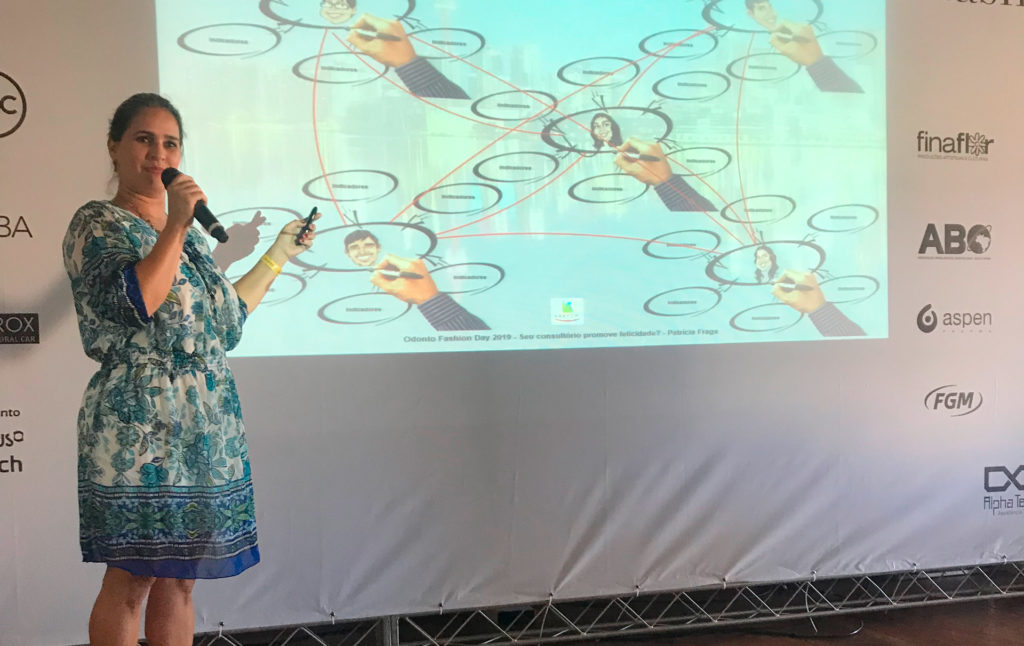
On September 12 and 13, 2025, I will be virtually present in Ribeira do Pombal, Bahia, for the 1st International Symposium on Meditation, Consciousness, and Self-Knowledge: In Search of Integral Education. This gathering brings together researchers, educators, and professionals from diverse fields to reflect on how ancestral practices and wisdom, combined with contemporary research, can transform the way we understand education and life.
My contribution will be the lecture “Education That Is Born from Within: Self-Knowledge, Consciousness, Space, and Happiness in Learning.” In it, I share the conviction that every true educational process begins within each human being. Before discussing methodologies, curricula, or technological resources, we need to turn our gaze inward, cultivate awareness of who we are, and recognize our talents, values, and purposes.
Integral Education: More Than Teaching Content
Integral education goes far beyond transmitting knowledge. It invites us to see the human being in their entirety: body, mind, emotions, spirituality, and social relationships. Learning is not just about accumulating information, but about integrating experiences that strengthen our identity, expand our awareness, and prepare us to live with balance and purpose.
In this sense, the space where learning takes place plays a fundamental role. The way we organize the environment, whether a classroom, an atelier, a community space, or even our own home, directly influences our disposition to learn, create, and interact. An environment can be a source of stress and blockage, or it can serve as a stimulus for creativity, calm, and happiness.
The Abayomi Methodology and the Six Pillars of Transformation
From this vision emerged the Abayomi Methodology, a structured path based on six pillars that support the creation of intelligent and joyful environments. These pillars consider the intelligent use of available resources, balanced management of space and time, the quality of human relationships, clarity of individual and collective purposes, authentic communication, and the cultivation of happiness as both a goal and a daily practice.
This methodology was born from the convergence of architecture, urbanism, pedagogy, neuroscience, management, and other fields of knowledge. Over the years, I have observed that when educators, families, and leaders begin to see space not just as a backdrop, but as a protagonist in the educational process, something profound happens: learning comes alive, self-knowledge flourishes, and communities are strengthened.
A simple example is the “creative corner”, suggested by visual artist Renata Guimarães: a space dedicated to free expression and experimentation, which I recommend in schools and homes. It serves as an invitation for children and adults to explore their creativity, exercise autonomy, and reconnect with their essence. This kind of practice demonstrates how the environment can be a powerful ally in integral development.

Self-Knowledge and Happiness as Foundations
I argue that self-knowledge and consciousness are foundations of integral education, not optional complements. Without knowing oneself, it is impossible to learn fully and meaningfully. Without consciousness, we lose the ability to act with purpose. Without happiness, learning becomes dry, disconnected, and soulless.
When we unite self-knowledge, consciousness, space, and happiness, we create the conditions for each person to achieve not only their professional or academic goals but also their deepest human potential. Learning becomes part of life itself, not just a chapter in it.
An Invitation to Transformation
Participating in this Symposium in Ribeira do Pombal is, for me, an opportunity to share this vision while also learning from so many researchers and educators who believe in the transformation of society through integral education.
I invite you, reader, to reflect: what is the space like where you learn, teach, work, or interact? Does it foster creativity, calm, and genuine exchange? Does it support your dreams and deepest values?
Rethinking spaces—both physical and symbolic—also means rethinking who we are and who we want to become. It is believing that happiness is a daily practice that can be present in every detail of how we organize our lives and relationships.
Education that is born from within is, ultimately, an act of love toward oneself and the collective. It is a path that invites us to transform schools, homes, communities, and cities into spaces of self-knowledge, consciousness, and fulfillment.
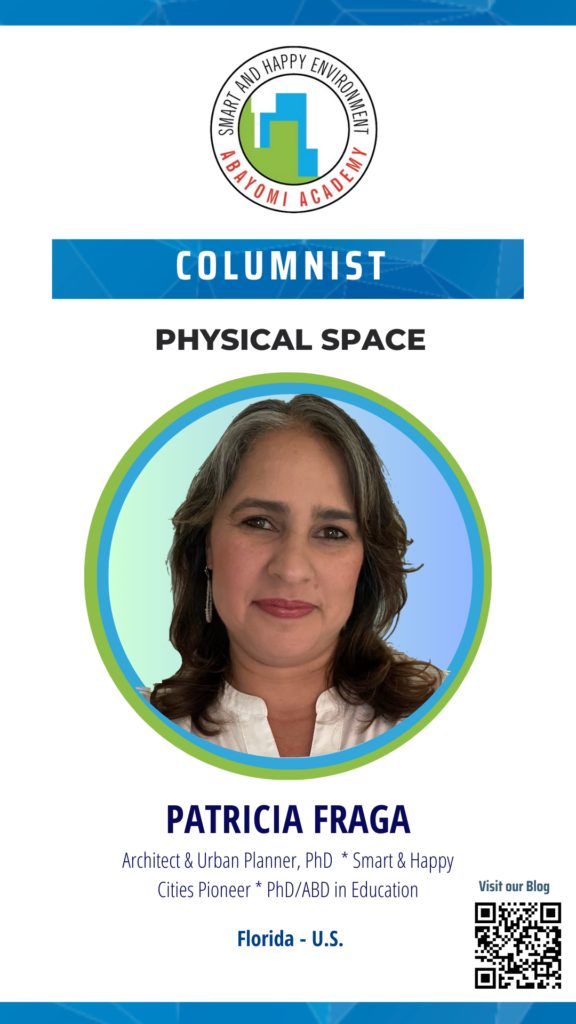
Patrícia Fraga, a visionary and dynamic professional, holds a Ph.D. in Architecture, blending her passions for sustainable urbanism, education, and technology. With a multifaceted career spanning engineering, construction, and academia, she is the Founder of Abayomi and the Executive Director of Abayomi Academy. Patrícia’s global influence extends through her roles as an international speaker, published author, and advocate for Smart & Happy Environments. Her commitment to cultural inclusion shapes transformative projects worldwide, emphasizing the integration of technology with environmental responsibility. A mother of five, Patrícia’s journey reflects resilience, innovation, and dedication to creating positive, sustainable, and joyful living spaces worldwide.
Get to know more about her: Facebook Instagram Youtube Linked In
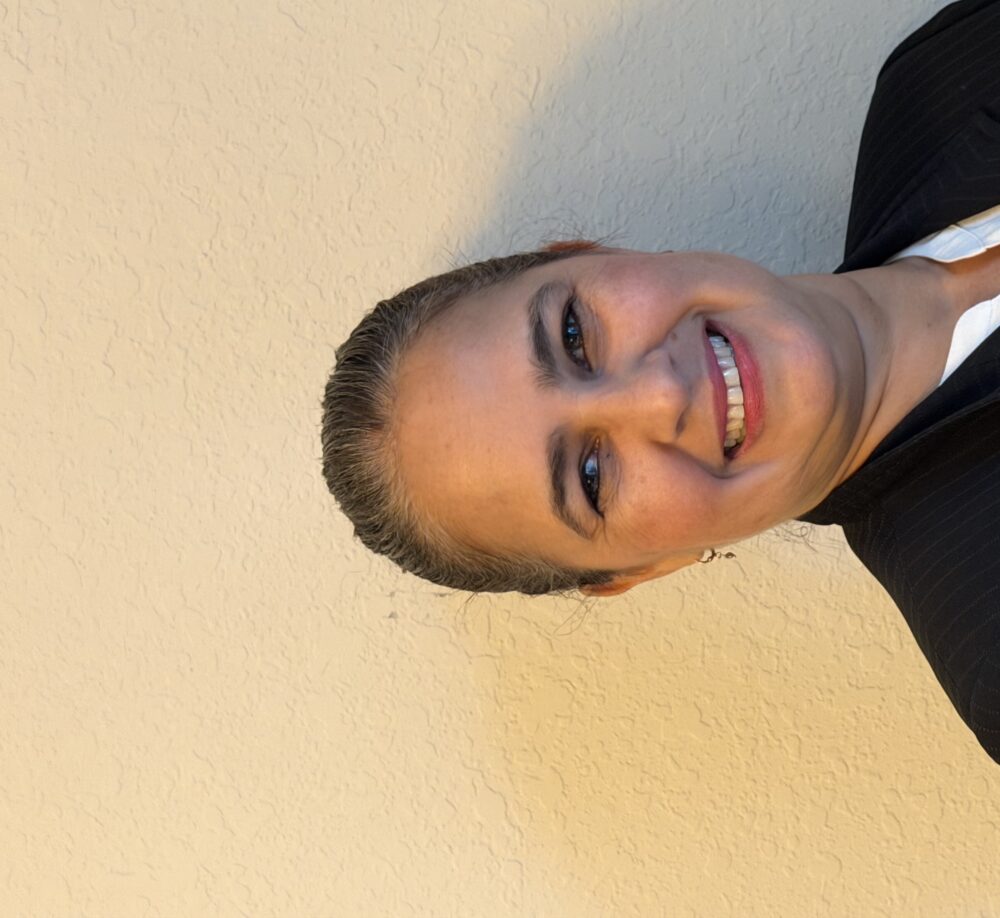
A visionary and dynamic professional, Dr. Fraga holds a PhD in Architecture and combines her passions for sustainable urbanism, education, technology, and promoting happiness. Architect and Urban Planner, PhD in Architecture and PhD/ABD in Education, with over 30 years of academic and professional experience. My work integrates smart cities, human-centered happiness, education, knowledge management, and emergency management and preparedness, connecting design, technology, and strategy to build intelligent, resilient, and sustainable environments. As a pioneer in Smart & Happy Cities, I develop frameworks that align urban planning, citizen engagement, and innovation to strengthen communities and enhance collective well-being. With expertise in AI-enhanced research, higher education development, curriculum design, and institutional planning, I contribute to more effective decision-making and future-ready organizations. I also provide consulting for institutions, professionals, and families seeking forward-thinking solutions in intelligent environments, educational innovation, resilience planning, and AI-integrated research — guided by the belief that we can only be fully happy in the collective.