By Dr. Lamiaa Adel Shaheen
Walkable communities have become a cornerstone of contemporary urban planning, offering healthier lifestyles, stronger social ties, and more sustainable urban growth. As cities around the world shift toward human-centered design, walkability is no longer a luxury—it is a necessity for future-ready urban environments.
1. What Is a Walkable Community?
A walkable community is an urban environment where people can reach daily needs—schools, shops, parks, transit, and workplaces—comfortably on foot within 5 to 10 minutes, typically a 400–800 m walking radius.
Its design prioritizes:
- Safe pedestrian pathways
- Compact land use
- Accessible public transit
- Active public spaces
- Mixed-use development
2. Why Walkability Matters
a. Health Benefits
Walkable areas promote everyday physical activity.
Figure 1: Residents of walkable neighborhoods can average 7,000–9,000 steps/day, compared to 3,000–5,000 in car-dependent areas.
Benefits include:
- Reduced obesity rates
- Lower cardiovascular disease risk
- Improved mental well-being
b. Environmental Impact
Walkable communities significantly reduce vehicle emissions.
Figure 2: A shift of 10% of car trips to walking can reduce CO₂ emissions by approximately 1–3 tons per person annually (depending on region and travel patterns).
Additional environmental gains:
- Improved air quality
- Reduced noise pollution
- Lower energy consumption for transportation
c. Economic Benefits
Walkability strengthens local economies by increasing foot traffic and supporting small businesses.
Figure 3: Retail streets with high walkability experience 20–40% higher customer spending.
For cities, walkability:
- Increases property values
- Reduces infrastructure costs (less parking, smaller road networks)
- Attracts tourism and investment
d. Social and Community Benefits
Walkable places create opportunities for casual encounters and social cohesion.
Public spaces—plazas, shared streets, shaded sidewalks—act as social connectors.
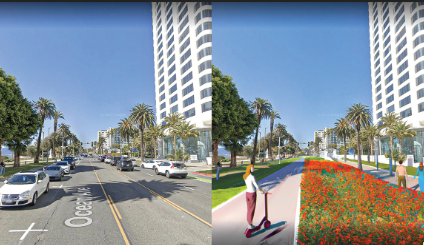
Figure 4: Walkable neighborhoods report 2–3× stronger levels of social interaction compared to car-centric communities.
3. Key Design Principles of Walkable Communities
a. Human-Scaled Streets
- Sidewalks 1.8–3 m wide
- Traffic calming measures (speed limits 20–40 km/h)
- Safe crossings every 80–120 m
b. Mixed-Use Development
Live–work–play environments reduce travel distance and encourage walking.
c. Shade and Thermal Comfort
Especially in warm climates:
- Tree canopies
- Arcades and shaded walkways
- Cooling materials in pavements
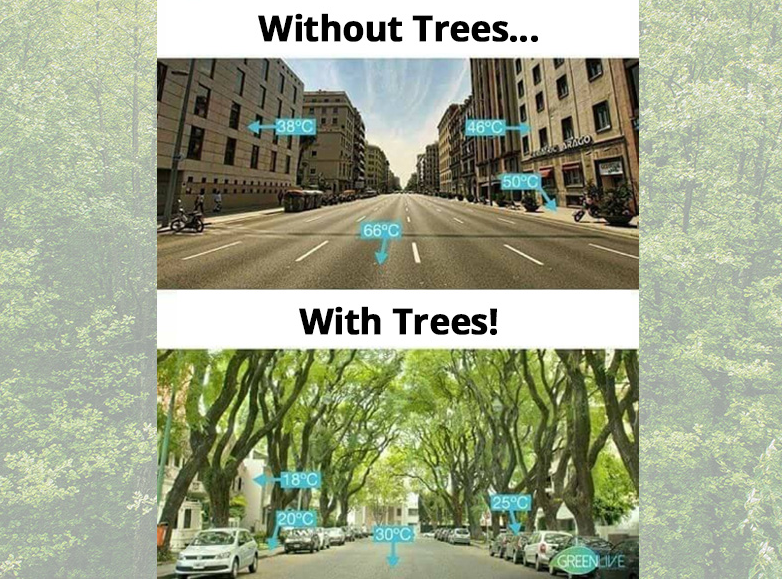
Figure 5: Tree-shaded streets can reduce perceived outdoor temperature by 6–10°C.
d. Public Transit Connectivity
Walkability and transit are inseparable.
Transit stops should be within 300–500 m walking distance.
e. Safety and Accessibility
- Smooth, accessible surfaces
- Lighting for nighttime safety
- Universal design for strollers, wheelchairs, and seniors
4. Walkability and the Future of Urban Living
Walkable communities are essential for resilient cities. By reducing dependence on cars, they address climate change, public health challenges, and declining social cohesion.
Cities that invest in walkability are advancing:
- Stronger civic identity
- Greener urban development
- Inclusive, equitable public spaces
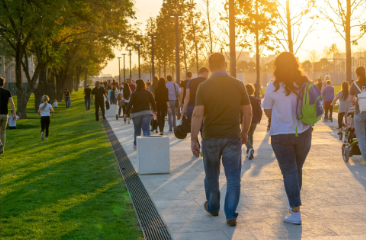
Figure 6: A 1-point increase in neighborhood walkability score is associated with a 6–8% rise in perceived quality of life.
Conclusion
Walkable communities are not just an urban design trend; they are a future-proof model for healthier, more sustainable, and more socially connected cities. By prioritizing human movement, comfort, and interaction, walkable environments allow people—not cars—to shape the life of the city.

Dr. Lamiaa Adel Shaheen is an accomplished Architect, Academic, and Researcher. Her expertise in the field has been recognized internationally, as evidenced by her prestigious UAE Golden Visa in the “Qualified professionals and Exceptional Talents” Category also recognized as Columnist 2024 Abayomi Academy, and Ambassador of Quality of Life UAE 2024, got 2nd place in the Abayomi Academy international Award for Physical space category 2024. With a Ph.D. in Architecture, she has dedicated her career to pushing the boundaries of Design and Innovation. Currently, Dr. Lamiaa serves as an Assistant Professor at Amity University Dubai, specializing in the Architecture and Interior Design Department. With a Focus on Sustainable Design and Human-Centric Spaces, Dr. Lamiaa continues to make a significant impact in the world of Architecture and Interior Design.
Get to know more about her: LinkedIn