By Patricia Fraga
A truly smart and happy city is built by engaged citizens who understand their role in the community and actively contribute to collective well-being. In this chapter, we explore the concept of Conscious Citizenship, one of the fundamental pillars of the Abayomi Methodology. To achieve an intelligent and welcoming urban environment, citizens must develop three key levels of awareness: Self-awareness, Situational Awareness, and Collective Awareness.

The Three Forms of Awareness in Conscious Citizenship
- Self-awareness: Who am I? A conscious citizen starts by knowing themselves—understanding their values, responsibilities, and how their actions impact the environment around them. Recognizing one’s rights and duties is essential for meaningful participation in society. This self-knowledge allows individuals to make informed choices that align with their personal and collective values, fostering a more engaged and responsible community.
- Situational Awareness: Where am I? Beyond personal identity, it is essential to understand the environment in which we live. This means analyzing our cities, neighborhoods, and communities—how they are structured, who lives in them, and what their needs and goals are. Situational awareness also involves recognizing the social, economic, and environmental factors that influence daily life and understanding how individual actions contribute to the broader urban ecosystem.
- Collective Awareness: How do I contribute? The highest level of conscious citizenship is active participation in community life. This means engaging in discussions, making decisions collectively, and working to improve public spaces and social dynamics. Citizens who embrace collective awareness understand that their engagement is essential for urban transformation. Whether through volunteering, civic participation, or simply fostering good neighborly relations, every action counts in building a smart and happy city.
Conscious Citizenship and the Other Abayomi Methodology Pillars
Physical and Digital Space – Conscious citizens demand well-planned environments that integrate physical and digital spaces efficiently. They participate in discussions on urban planning, accessibility, and the responsible use of technology to improve connectivity and public services.
Innovative Management – A smart city requires leaders who listen to their citizens. When people are aware of their role, they can influence public policies, ensuring that investments and solutions align with real community needs rather than fleeting technological trends.
Intelligent Communication – A city that fosters clear and inclusive communication enables citizens to access information and express their concerns effectively. Conscious citizenship strengthens participatory democracy, ensuring that all voices are heard and considered in decision-making.
Human Relations – Engaged citizens help create environments that promote positive social interactions, strengthening bonds and fostering a culture of collective support. Whether in public squares, community centers, or digital forums, relationships are the foundation of a thriving city.
Health and Well-being – Citizen awareness extends to self-care and the well-being of others. From advocating for green spaces and recreational areas to participating in health initiatives, conscious individuals help create a city that prioritizes quality of life for all.
Moving Forward: How to Foster Conscious Citizenship?
Promoting a culture of conscious citizenship requires investment in education, dialogue, and engagement opportunities. Schools, community organizations, and local governments must work together to create platforms where people can learn, discuss, and participate actively in urban development.
In the next chapters, we will explore how other pillars of the Abayomi Methodology influence urban transformation and how small and medium-sized cities can apply these concepts to create smarter and happier communities.
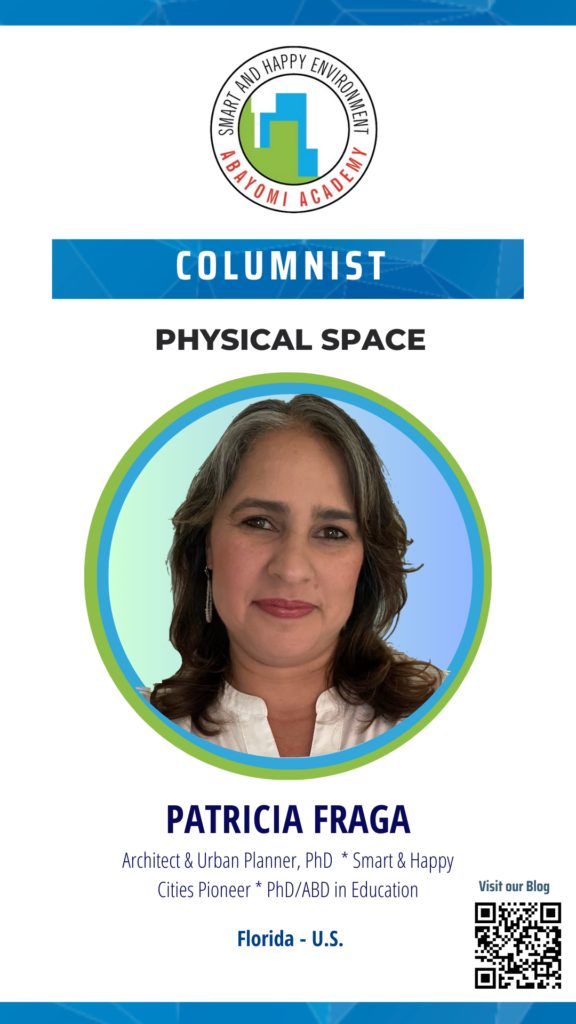
Patrícia Fraga, a visionary and dynamic professional, holds a Ph.D. in Architecture, blending her passions for sustainable urbanism, education, and technology. With a multifaceted career spanning engineering, construction, and academia, she’s the Founder and Chief Happiness Officer at Abayomi LLC and Executive Director at Abayomi Academy. Dr. Fraga’s global influence extends through her roles as an international speaker, published author, and advocate for Smart & Happy Environments. Her commitment to cultural inclusivity shapes transformative projects worldwide, emphasizing the integration of technology with environmental responsibility. A mother of five, Dr. Fraga’s journey reflects resilience, innovation, and a dedication to creating positive, sustainable, and joyful living spaces across the globe.
Follow her social media: Facebook Instagram Youtube Linked In

A visionary and dynamic professional, Dr. Fraga holds a PhD in Architecture and combines her passions for sustainable urbanism, education, technology, and promoting happiness. Architect and Urban Planner, PhD in Architecture and PhD/ABD in Education, with over 30 years of academic and professional experience. My work integrates smart cities, human-centered happiness, education, knowledge management, and emergency management and preparedness, connecting design, technology, and strategy to build intelligent, resilient, and sustainable environments. As a pioneer in Smart & Happy Cities, I develop frameworks that align urban planning, citizen engagement, and innovation to strengthen communities and enhance collective well-being. With expertise in AI-enhanced research, higher education development, curriculum design, and institutional planning, I contribute to more effective decision-making and future-ready organizations. I also provide consulting for institutions, professionals, and families seeking forward-thinking solutions in intelligent environments, educational innovation, resilience planning, and AI-integrated research — guided by the belief that we can only be fully happy in the collective.