By Patricia Fraga
Throughout 2025, we explored the pillars of the Abayomi Methodology that make cities, homes, and workplaces smarter and happier. We conclude this series by reflecting on how every choice impacts the lives of people, communities, and the planet.
To continue this journey, we present the ESG/SDG Manifesto for Sustainable, Healthy, Intelligent, and Happy Environments, launched during the IV Smart Cities, Happy Citizens World Summit 2025. This Manifesto is a public commitment, open to both individuals and organizations, proposing the integration of conscious practices in our environments, relationships, use of resources, and information management, aligned with ESG principles and the Sustainable Development Goals (SDGs). Signing the Manifesto means actively engaging in the creation of spaces that promote health, well-being, happiness, and sustainability—turning knowledge into action.
For 2026, we invite you to include these practices in your New Year’s resolutions. Here are practical actions for each pillar of the Abayomi Methodology that can be incorporated into your life, home, work, and community:
1. Conscious Citizenship
Take responsibility for your choices and their impact on the collective.
Practical suggestions:
- Develop habits of empathy and attention to the needs of those around you.
- Participate in dialogue circles, workshops, and community meetings.
- Promote civic and environmental education, reflecting on consumption, energy, water, and waste.
- Encourage digital safety and conscious technology use at home, school, or work.
- Create small daily actions of shared responsibility, such as organizing common spaces or collaborating on collective tasks.
2. Physical and Digital Environments
Well-planned spaces promote efficiency, comfort, and well-being.
Practical suggestions:
- Organize and illuminate your home and workspaces to be functional and welcoming.
- Incorporate green areas, plants, gardens, or small urban gardens.
- Ensure clear signage and digital resources that complement, but do not replace, the physical experience.
- Invest in thermal, acoustic, and lighting comfort, adequate ventilation, and air quality.
- Reduce material and energy waste, adopting sustainable habits.
3. Innovative Management
Planning and organizing consciously make environments more efficient and human-centered.
Practical suggestions:
- Plan task flows and responsibilities, leveraging the skills within your network.
- Establish small self-sustainability routines, such as material reuse, composting, or community gardens.
- Encourage exchanges of objects, skills, and services among neighbors, friends, or colleagues.
- Identify and solve everyday bottlenecks, balancing productivity and well-being.
- Use financial and material resources consciously, prioritizing long-term solutions.
4. Intelligent Communication
Spaces that communicate clearly and warmly reduce conflicts and promote belonging.
Practical suggestions:
- Use colors, decor, signage, and furniture layout to indicate functions and guide naturally.
- Ensure clear, accessible, and inclusive communication among all space users.
- Leverage digital tools for planning, information, and consultation without replacing in-person communication.
- Create information boards, icons, and labels that make life easier and increase autonomy.
- Practice active listening and continuous dialogue, valuing everyone’s contributions.
5. Human Relations
Strengthening connections is essential for community vitality and collective happiness.
Practical suggestions:
- Encourage meetings, dialogue, and collaboration, even in small environments.
- Recognize the talents, skills, and contributions of those who share the space.
- Create opportunities for mutual help and experience exchange.
- Value diversity, promoting inclusion and respect for differences.
- Foster intergenerational, cultural, and community activities that encourage empathy and coexistence.
6. Health and Well-Being
Balanced environments contribute to physical, mental, and emotional well-being.
Practical suggestions:
- Prioritize natural lighting, ventilation, thermal, and acoustic comfort.
- Incorporate contact with nature: plants, gardens, urban farms, or green spaces.
- Balance technology use: set schedules for cell phones, Wi-Fi, and devices, respecting sleep, focus, and mental health.
- Establish routines for movement, breaks, and restorative rest.
- Observe signs of stress and fatigue in the environment and adopt changes that promote relaxation and balance.
Turning knowledge into action is the first step toward a more conscious, healthy, and happy 2026. Choose your resolutions based on these practices and sign the ESG/SDG Manifesto for Sustainable, Healthy, Intelligent, and Happy Environments, becoming an active part of a network that promotes more human and sustainable cities, homes, and workplaces.
🔗 Sign the Manifesto here: https://forms.gle/TwSavrV9kKVPR4MH6
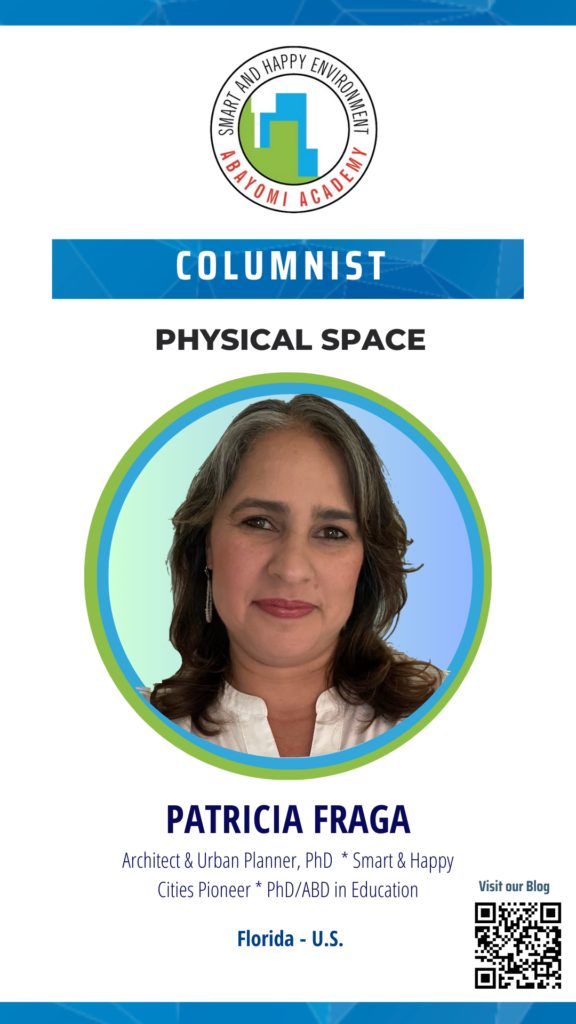
Patrícia Fraga, a visionary and dynamic professional, holds a Ph.D. in Architecture, blending her passions for sustainable urbanism, education, and technology. With a multifaceted career spanning engineering, construction, and academia, she’s the Founder and Chief Happiness Officer at Abayomi LLC and Executive Director at Abayomi Academy. Dr. Fraga’s global influence extends through her roles as an international speaker, published author, and advocate for Smart & Happy Environments. Her commitment to cultural inclusivity shapes transformative projects worldwide, emphasizing the integration of technology with environmental responsibility. A mother of five, Dr. Fraga’s journey reflects resilience, innovation, and a dedication to creating positive, sustainable, and joyful living spaces across the globe.
Follow her social media: Facebook Instagram Youtube LinkedIn