By Beto Marcelino, chairman of the board at iCities
Created by Belgian entrepreneur, economist, and author Gunter Pauli, the concept of the Blue Economy presents a development model that integrates the sustainable use of ocean and coastal resources with business generation and job creation, always considering citizens’ well-being.
In Brazil, a country of continental dimensions with over 8,000 kilometers of coastline and home to the so-called Blue Amazon (the Brazilian territory that stretches from the coastal zone to the outer limit of the continental shelf, the submerged extension of the country’s landmass), bringing this concept into the spotlight is not just necessary, it’s urgent.
The ocean economy is a strategic driver in building a more sustainable future. In Brazil, sectors such as fishing, coastal tourism, sustainable energy, marine biotechnology, and maritime transport currently account for 2.9% of the national GDP, according to data from USP (University of São Paulo), and could reach 6.5% when indirect effects are included. Together, they involve more than 4.7 million workers.
Recognizing this potential, last year we held the first edition of Tomorrow Blue Economy, in Niterói city, and had the honor of welcoming Gunter Pauli himself as a keynote speaker. The idea of bringing this international gathering to Brazil came from the sense of urgency to promote dialogue on topics such as coastal resilience, climate change, water sports, sustainable ports, technology, and water governance, while showcasing the vast range of opportunities that the ocean economy offers to our country.
Creating and strengthening spaces for dialogue like this is essential to expanding the engagement of public managers, entrepreneurs, researchers, and changemakers committed to an intelligent and sustainable economic development model.
Looking ahead, according to the OECD’s (Organisation for Economic Co-operation and Development) report The Ocean Economy to 2050, the future of the Blue Economy depends on the global capacity to balance economic growth, innovation, and environmental sustainability. Without coordinated action that prioritizes these core values, the deterioration of ocean conditions and the slow pace of the energy transition could threaten job creation, biodiversity, and economic stability by the year 2050.
The study also points out that information and digital technologies are still underutilized in this sector, a factor that limits efficiency and innovation gains but, in my view, also reveals a great opportunity.
In the second edition of Tomorrow Blue Economy Niterói, we intend to engage the local population, those whose livelihoods depend on the ocean economy, by sharing knowledge, fostering innovation, social inclusion, and environmental sustainability. Building a future-oriented Blue Economy requires designing an economic model capable of generating development without compromising marine ecosystems or the well-being of the communities that rely on them.
In addition, key focus areas such as efforts to preserve marine biodiversity, the transition to renewable energy sources (especially offshore wind power), and the strengthening of sustainable tourism, including nautical tourism, ecotourism, and marine wildlife observation, will be at the core of the discussions, demonstrating that it is possible to harness the ocean’s economic potential in a responsible and regenerative way.
In essence, the Blue Economy represents a tremendous opportunity for Brazil to drive sustainable development by integrating innovation, entrepreneurship, environmental preservation, and social inclusion. Promoting dialogue is a vital step toward advancing this agenda and building a more prosperous, sustainable, and balanced future for us all.
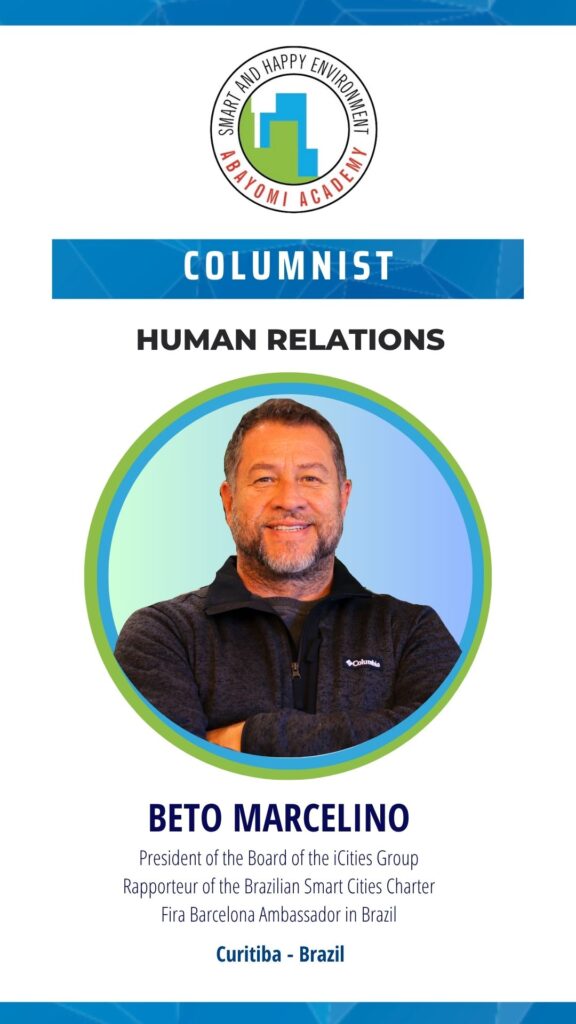
Beto Marcelino serves as Chairman of the Board for iCities Group and is the co-founder of the Brazilian holding company, a benchmark in the urban innovation and smart cities ecosystem. As a pioneering agent in this field, he was one of the rapporteurs for the Brazilian Charter of Smart Cities, an initiative by the Ministry of Cities, and also participated in the Cities 4.0 program, from the Ministry of Science, Technology, and Innovations (MCTI), contributing to the construction of the National Policy for Smart Cities.
He holds a degree in Agronomic Engineering from the Federal University of Paraná (UFPR), with a specialization in smart cities from Smart City Expert, and an MBA in Marketing from FAE Business School. He is also an ambassador for Fira Barcelona in Brazil, strengthening the connection between global events and the Brazilian urban context.
Social Media:
Instagram: Instagram Instagram
LinkedIn: Beto Marcelino