By Alessandro Lopes
Imagine waking up in 3025. Your house has already adjusted the temperature before you even step out of bed. Your digital assistant has your coffee ready, and your self-driving bike is waiting at the door. But what really matters? The extra time you have to walk around the city, catch up with friends, or learn something new.
If we could jump a thousand years ahead, what kind of world would we find? A Jetsons-style utopia with flying cars and floating buildings? Or something closer to the Flintstones, where technology is all about clever improvisation? Maybe a mix of both, where innovation and sustainability go hand in hand.
Melting glaciers, rising oceans, redrawn continents. The new frontiers are digital and climate-driven. Humanity had to reinvent itself. Floating cities? Yes. Underwater metropolises? Also, yes. Future engineering knows no limits. Resilient, adaptable, and environmentally integrated structures became the key to survival.

But who will actually live in these cities? High-tech means nothing if it’s not accessible. Housing will be a right, not a luxury. 3D-printed homes, regenerative materials, and modular solutions will ensure sustainable living spaces for everyone. Real privilege won’t be about square footage—it’ll be about quality of life.
Education? It’ll be unrecognizable compared to today. No more square classrooms and outdated teaching methods. Learning will be about living. Immersive environments, personalized experiences, and AI mentors will help everyone reach their full potential. Physical books? Maybe. But education will be woven into everyday life, interactions, and the very fabric of the city itself.
And what about artificial intelligence? Will it be our greatest ally or the biggest question mark? Cities that adjust themselves in real-time, smart transport that predicts our needs, and digital assistants that actually understand emotions. But what about human creativity? Will we still be the main characters in our own story, or will we hand over even our dreams to machines? If history has taught us anything, it’s that humans always find a way to adapt. Maybe the future isn’t about AI taking over—it’s about striking the perfect balance between human intuition and machine efficiency.
And mobility? No more traffic jams or absurd commutes. Cities will be designed to offer instant access to everything, with ultra-fast, eco-friendly transport and solutions we haven’t even imagined yet. Maybe drone taxis and vacuum-tube transport will finally become mainstream. But the real goal? Less time stuck in transit, more time actually living.
But the biggest game-changer in 3025 won’t be technology—it’ll be humanity itself. After centuries of environmental and social crises, we’ll finally learn that innovation without empathy means nothing. Radical individualism will give way to a more collaborative way of life. Collective well-being will be the new currency. What’s the point of an ultra-modern city if there’s no space for connection, belonging, and happiness?
If AI takes care of everything, what will be left for us to do? How will we handle a world where work might be optional and comfort might be unlimited? Innovation has to keep pushing us forward—not just technologically, but as people, as creators, as seekers of meaning.
So, where do you see yourself in 3025? A floating city in the sky? A sustainable oasis in the desert? Or maybe an underwater metropolis, where life thrives beneath crystal-clear waves? No matter the setting, one thing is certain: the smartest cities will be the ones where technology and humanity walk side by side—without needing a dinosaur to power the washing machine.
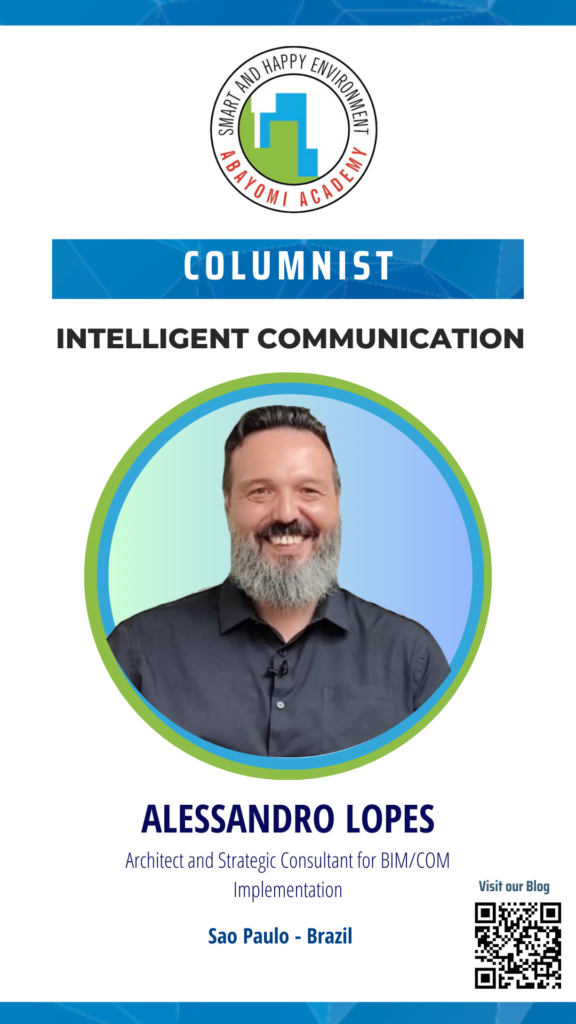
Alessandro Lopes is an architect and consultant in BIM/CIM and Smart Cities, with a master’s degree in Environmental Law from UNISANTOS, focusing on Creative and Sustainable Cities. He serves as an Advisor at the Municipality of Santos, leading urban revitalization and sustainability projects, and as Coordinator of the Architecture and Urbanism Program at ESAMC Santos, bridging education, market, and innovation. A specialist in project management and sustainability, he is a CBIM member, speaker, and commentator on radio and podcasts about innovation in civil construction. His key contributions include the modernization of Santos’ waterfront and restructuring the public administration’s quality and control sector.
Get to know more about him: Facebook. Instagram. Linked In