By Patricia Fraga
Back to School: Turn Your Home into an Ally for Learning, Well-Being, and Connection
By Patrícia Fraga
August marks the beginning of a new cycle for thousands of families in the Northern Hemisphere: it’s the start of the 2025–2026 school year. Children pack their backpacks, teenagers revisit their schedules, and college students get organized for another season of discovery, learning, and challenges. Routines change, calendars shift, and the rhythm of the home transforms. But amid this external movement, an essential question arises: Is your home ready for the back-to-school season?
With so many academic and emotional demands, it’s time to look inward—at your home and yourself. The way we organize our living spaces has a direct impact on our mental balance, family relationships, and our children’s success at school or university. The Healing Home project, developed by Abayomi in partnership with MelhordeSi, is based on applied neuroscience and invites you to transform your home into a true support system for daily life.
1. The Environment Reflects and Shapes the School Routine
As a new school term begins, it’s natural to plan schedules, purchase supplies, book extracurriculars, and reorganize the household logistics. However, it’s essential to align all of this with the physical environment. How is your child’s study area? And what about your own reading or work space?
Natural light, good ventilation, comfort, silence, and organization are powerful allies of focus and discipline. The ideal environment must meet the specific needs of each family member, from a young child’s cozy reading nook to a dedicated workspace for university research. Intentionally adapting your home allows everyone to feel a sense of belonging and respect, while encouraging greater participation in the family’s routine.
2. A Human-Centered Routine
Home organization starts with listening: what does each person need? How do they feel in their bedroom, the living room, and the kitchen? The next step is to create realistic routines with defined schedules and dedicated moments for connection throughout the day or week.
Incorporating activities that children and young people enjoy—like dancing, drawing, playing, or spending time with friends—helps maintain emotional balance and strengthens family bonds. The home should support the development of autonomy: accessible shelves for organizing school materials, a designated study space, bedtime routines, and time to play. College students, too, should plan their spaces to encourage focus and mental health, balancing productivity and rest.
3. Less Screen Time, More Life: Create Spaces that Invite Living
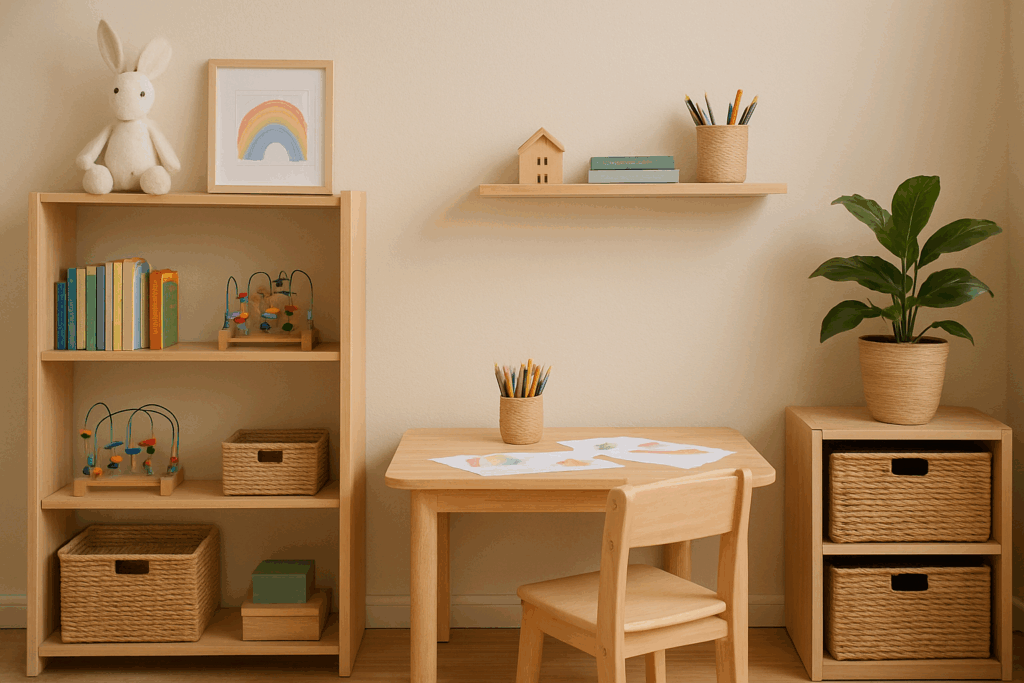
One of the biggest concerns among parents and educators is that children and teens are spending too much time on screens. Your home environment can and should help reduce that dependency. How? By creating a visible and inviting “creative corner”, a space with books, board games, paper, musical instruments, paints, clay, or anything else that fits your family’s lifestyle. The key is to keep these options accessible and visible while keeping remotes, tablets, and phones out of immediate reach.
Avoid placing televisions in bedrooms! The TV can return to its traditional role as a point of connection in the living room. Similarly, computers should only be in bedrooms if strictly necessary. For children and teens, devices should ideally be kept in shared areas where their use can be seen and guided. By making passive screen use less convenient and encouraging hands-on, creative, and social activities, you open the door to holistic development.
Parents and children can do things together: cook, take a walk, do a puzzle, watch a good movie, or simply talk without rushing.
4. Healing Spaces: Applied Neuroscience in Real Life
Beyond aesthetics, the Healing Home concept invites a new perspective on our environments: they can be agents of emotional healing, cognitive development, and even prevention of mental disorders.
Based on applied neuroscience, this project explores how disorder, noise, excessive visual stimuli, electromagnetic fields, and non-functional layouts directly affect mental health, especially for children and adolescents.
Creating a helpful home is possible with simple steps:
✘ Turn off Wi-Fi at night.
✘ Don’t sleep with your phone under your pillow or close to your body. Ideally, keep it out of the bedroom.
✘ Keep power outlets and extension cords away from bed headboards or use neutralizing devices if they cannot be moved.
✘ Avoid having a TV or computer in bedrooms, especially for children and teens.
✔ Choose spaces with fewer visual distractions and more sensory comfort.
Less clutter, more clarity. Less stimulation, more peace. Less rigidity, more connection. Your home can become a silent ally for learning, creativity, connection, and rest.
Abayomi offers personalized consulting for those who wish to create a Healing Home, using applied neuroscience and the Abayomi Methodology. To learn more, write to: abayomi@abayomi.net.
Practical Tips to Start Turning Your Home into a Space that Welcomes and Supports
✔ Do a general clean-up with the family: separate what you no longer need and donate or discard it. Less clutter means more mental clarity.
✔ Create a visible and inviting “creative corner” with books, art supplies, games, or instruments.
✔ Designate a functional study space with good lighting, comfort, and minimal distractions.
✔ Set a visible family routine: use a board, planner, or wall calendar to show study times, meals, and rest.
✔ Establish small daily rituals: like screen-free breakfasts, bedtime prayers or stories, or a weekly family walk.
In this new school year, may your home be a nest of support, creativity, and affection—ready to help your children (and yourself) learn, grow, rest, and connect.
True happiness begins in environments created with listening, care, and intention.
Patrícia Fraga, a visionary and dynamic professional, holds a Ph.D. in Architecture, blending her passions for sustainable urbanism, education, and technology. With a multifaceted career spanning engineering, construction, and academia, she is the Founder of Abayomi and the Executive Director of Abayomi Academy. Patrícia’s global influence extends through her roles as an international speaker, published author, and advocate for Smart & Happy Environments. Her commitment to cultural inclusion shapes transformative projects worldwide, emphasizing the integration of technology with environmental responsibility. A mother of five, Patrícia’s journey reflects resilience, innovation, and dedication to creating positive, sustainable, and joyful living spaces worldwide.
Get to know more about her: Facebook Instagram Youtube Linked In

A visionary and dynamic professional, Dr. Fraga holds a PhD in Architecture and combines her passions for sustainable urbanism, education, technology, and promoting happiness. Architect and Urban Planner, PhD in Architecture and PhD/ABD in Education, with over 30 years of academic and professional experience. My work integrates smart cities, human-centered happiness, education, knowledge management, and emergency management and preparedness, connecting design, technology, and strategy to build intelligent, resilient, and sustainable environments. As a pioneer in Smart & Happy Cities, I develop frameworks that align urban planning, citizen engagement, and innovation to strengthen communities and enhance collective well-being. With expertise in AI-enhanced research, higher education development, curriculum design, and institutional planning, I contribute to more effective decision-making and future-ready organizations. I also provide consulting for institutions, professionals, and families seeking forward-thinking solutions in intelligent environments, educational innovation, resilience planning, and AI-integrated research — guided by the belief that we can only be fully happy in the collective.