By Vanessa Canever, Founder of Potenciologia
There is something profoundly human in the desire to see others thrive. Whether leading a team, guiding a family, or contributing to a community, we are constantly placed in positions of influence — and perhaps of awakening — the hidden potential of those around us. This is no simple task. It requires presence, discernment, and the courage to believe in what is not yet visible.
As leaders and parents, we hold fundamental roles in the architecture of human development. We are not merely managers of behavior or providers of needs; we are facilitators of transformation, and on this path, we are also called to grow.
Recognizing Potential: Beyond Performance and Behavior
Many of us were taught to equate potential with performance. When someone achieves good results, we celebrate their talent. When someone struggles, we often assume they lack ability. But human potential is not performance — it is possibility. It is that silent, often unnoticed spark that lives in every person, waiting for the right conditions to ignite.
Recognizing it requires a shift in perspective. It means looking beyond visible behavior and asking deeper questions: What’s behind this reaction? What strength is being suppressed by fear, trauma, or lack of opportunity? What dream was silenced before it could be born?
In this sense, both leadership and parenting become acts of deep listening — not only to what is said, but also to what has not yet been expressed.
The Power of Belief: How Expectation Shapes Reality
The work of Carol Dweck on growth mindset and Bruce Lipton’s Biology of Belief show us that belief holds power. When someone believes in us, our capacity to achieve expands. The opposite is also true: when we are doubted by those in positions of leadership, we begin to doubt ourselves.
This means our expectations are not neutral. They are self-fulfilling prophecies. A parent who repeatedly tells a child they are “lazy” is not merely making an observation — they are casting a role. A manager who assumes a team member “lacks leadership potential” may never give them a chance to prove otherwise.
We must ask ourselves: What are we projecting onto the people we guide or educate? Are we making space to be surprised? Are we willing to be wrong about them — in the best possible way?
Creating Environments of Psychological Safety
Potential does not flourish in environments of fear or excessive control. It thrives in spaces of safety, curiosity, and trust. People perform better when they are not afraid to make mistakes, ask questions, or show vulnerability.
This is especially true in parenting. A child who fears punishment may hide their mistakes — and with them, their learning. Likewise, in the workplace, someone who feels judged may withdraw, keep ideas to themselves, and avoid risks.
We need to build environments where people feel safe to experiment, fail, and grow. This does not mean an absence of boundaries or standards. It means that expectations are paired with empathy. That feedback is delivered with respect. That correction is always in service of development — not domination.
From Authority to Partnership
True leadership — whether in a company or a home — is not about power over others. It is about power with others. About cultivating autonomy rather than dependence. Inspiration rather than fear. Responsibility rather than blind obedience.
This shift requires a change in mindset: from control to partnership. Instead of asking “How do I get them to do what I want?”, we begin to ask, “How can I help them become better than they imagine they can be?”
This transformation is profound. It changes how we speak, how we listen, how we set boundaries, and how we praise. It changes everything — because it is rooted in respect for each person’s uniqueness and a commitment to their long-term flourishing.
Practical Tips for Awakening Potential
Whether you are leading a team or raising a child, simple and consistent actions can make a great difference:
- Increase self-awareness
Help people observe themselves more deeply. Encourage them to reflect on their preferences, motivations, talents, and challenges. Sincere, curious questions are a great place to start. - Make everyone aware of each other’s strengths
When a team or family knows what each person is good at, opportunities for collaboration, mutual appreciation, and collective growth increase. - Give intentional recognition and praise
Honest and specific compliments fuel development. Say what you saw, why it mattered, and how it made a difference. Recognition boosts self-esteem and engagement. - Encourage applying strengths in new contexts
Help people see that what they do well in one area can be useful in another. An organized child might use that skill to lead a school project. A communicative colleague can contribute to trainings, meetings, or events. - Use strengths to develop areas for growth
Connecting skills is powerful. Someone who is creative can use that creativity to solve technical problems in new ways. A person with empathy can improve their negotiation skills. Strengths are allies in the evolution process. - Encourage experiences beyond the norm
At home, this might mean exploring art, sports, emotional intelligence, or volunteer projects. At work, it could include job rotation, temporary challenges, or involvement in cross-functional initiatives. Diverse experiences broaden perspectives and build adaptability. - Encourage a Broader Perspective (Shifting from Self-Centeredness)
Fostering genuine interest in the common good helps develop empathy, collective responsibility, and a collaborative spirit. Invite reflections and actions that involve caring for others, contributing to the group, understanding different perspectives, and acting with generosity. An environment where everyone feels part of and responsible for the whole enhances both individual and collective growth.
Conclusion: The Shared Work of Becoming
Awakening potential is not a technique. It is a posture. A way of being in the world. A commitment to what is not yet — but can be. It may be one of the most precious responsibilities we can take on — as parents, leaders, educators, or simply as human beings walking alongside other human beings.
In a world that often prioritizes speed, performance, and results, this kind of presence is both revolutionary and urgently needed.
We do not need to be perfect to do this work. But we must be willing to see, to listen, to believe, and to grow. Because in the end, every act of awakening someone else’s potential is also an invitation to awaken our own.
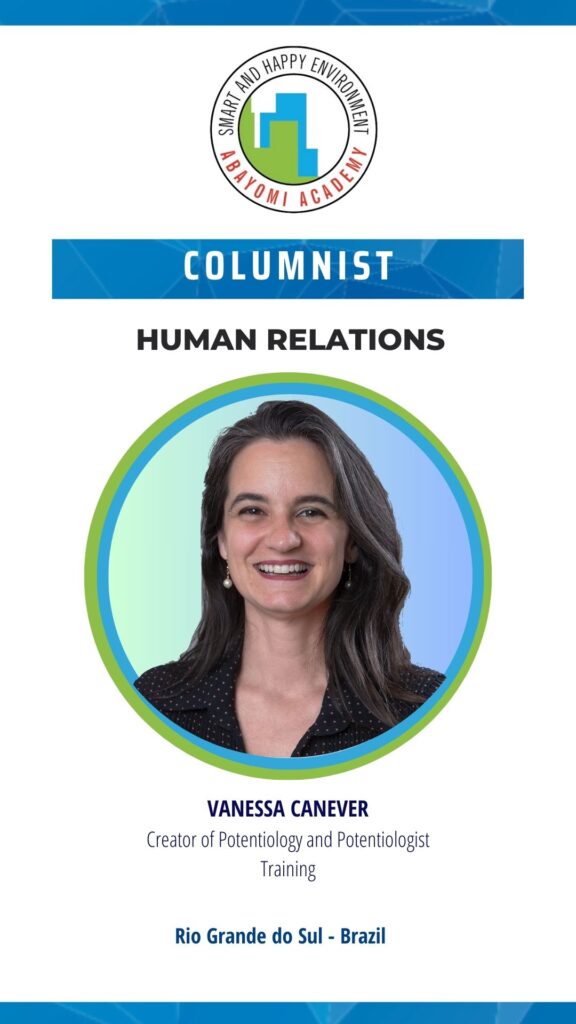
Creator of Potentiology and Potentiologist Training. Master’s Degree in Education. Postgraduate in people management, business pedagogy, group dynamics, and distance learning. Specialist in Emotional Intelligence and agile methods. Works with human potential and the development of people so that they can achieve better results, in the shortest possible time, and in a light way.