By Vanessa Canever, creator of the Potenciology
Ever felt like you’re standing before something new and exciting, yet a bit intimidating? That’s how Artificial Intelligence (AI) feels for many of us. It’s out there, shaping the world, changing how we work, create, and connect. Sometimes, it seems like we’re swimming against the tide, trying to figure out how it fits into our lives. The truth is, AI isn’t just a tool—it’s an invitation to rethink who we are and how we can thrive in a constantly evolving world. In this article, we’ll explore how AI is already part of our present, why we shouldn’t fear it, and how we can use it creatively and consciously to build a better future.
AI is part of our present and future
AI isn’t some far-off concept reserved for sci-fi movies or tech labs. It’s here, now, in the details of our daily lives: in the phone assistant answering our questions, the algorithm suggesting the next video to watch, or the tool organizing our emails. AI isn’t a passing trend—it’s here to stay, like electricity or the internet. And like any major shift, it asks us to learn how to navigate it. Those who choose to ignore it may feel out of sync, like someone clinging to a typewriter in a world of computers. The question isn’t whether AI will change the game, but how we can use it to play better, with more ease and purpose.
Fear of AI: an obstacle to overcome
Sometimes, AI feels like a giant wave ready to swallow everything we know. Will it take our place? Will we become obsolete? This fear is natural—it arises whenever something new shakes up the way things work. But if we let fear take over, we risk becoming paralyzed, unable to see AI for what it truly is: a partner, not a rival. When we’re stuck in fear, we miss the chance to use our intelligence to create with it and explore what it can offer. AI isn’t something to fear but something to understand. It’s like learning to dance with a new partner: it might feel awkward at first, but with time, we find the rhythm.
The Advantages of AI: to create and connect
AI is like a breeze that helps us sail faster and farther. It brings possibilities we might not reach on our own. Here are some ways it transforms how we work and live:
- Speeds up our work: Tasks that used to take hours, like organizing data or creating reports, can now be done in minutes, freeing up time for what truly matters.
- Frees our energy: By handling repetitive tasks, AI leaves us free to think, plan, and create with more freedom.
- Sparks new ideas: It suggests paths we might not see alone, like a friend offering a fresh perspective.
- Enhances collaboration: Working with AI is like having an entire team by your side, ready to provide insights anytime.
- Personalizes experiences: From tailored marketing campaigns to customized services, AI makes personalization feel effortless.
- Reduces errors: In fields like medicine or finance, it spots patterns we might miss, bringing greater accuracy.
- Connects the world: Tools like automatic translation break down language barriers, bringing people and ideas closer than ever.
These advantages show that AI doesn’t just optimize our work—it expands the possibilities for innovation, enabling individuals and organizations to achieve results once unimaginable. AI isn’t just about doing things faster or better; it’s about making more room for what makes us human.
Challenges of AI: Seeking Smart Solutions
Artificial intelligence (AI) offers significant benefits but also presents challenges. Its use can lead to cognitive passivity, job displacement, inaccurate information, unequal access, ethical concerns such as privacy, and high energy consumption due to intensive computational infrastructure.
In Potenciology, we strive to maximize advantages and minimize disadvantages, not by ignoring challenges but by addressing them consciously and intelligently. For example, to reduce energy consumption, we can reserve AI for complex research, using search engines like Google for simpler tasks. To prevent dependency and cognitive decline, it’s essential to foster independent systems and promote continuous learning, balancing AI use with the development of human skills. Below is a list of challenges and strategies for the intelligent use of this technology:
- Cognitive Passivity and Excessive Dependency: Promote continuous learning and create independent systems that encourage critical thinking and the practice of human skills.
- Job Displacement: Invest in education and professional requalification to prepare workers for roles that complement AI.
- Inaccurate Information: Develop critical thinking to evaluate and filter AI responses, verifying reliable sources.
- Unequal Access: Democratize access through free or low-cost platforms and inclusive educational initiatives.
- Ethical Concerns: Establish strict ethical regulations and promote responsible use of technology.
- High Energy Consumption: Reserve AI for complex research, use search engines for simple tasks, and prioritize efficient algorithms and renewable energy sources.
AI as a partner
What if, instead of worrying about AI replacing us, we saw it as an ally? AI doesn’t have our intuition, empathy, or ability to make sense of things. It doesn’t replace what makes us unique—it can amplify it. For example, an entrepreneur might use AI to analyze the market: the numbers come from AI, but the strategy comes from them. A designer might use AI to generate initial drafts, but it’s their unique vision that turns those ideas into something memorable. The magic happens when we work together, using AI to enhance our best qualities. Learning to collaborate with it is like learning to work in a team: it takes practice, patience, and a bit of curiosity.
The world of work is changing, and AI is already part of the game. Companies of all sizes are looking at it not just as a tool but as a sign of who’s ready for the future. In many hiring processes, knowing how to use AI is already a deciding factor. It’s not about being a programming genius but about showing you understand the value of this tool and how to apply it. Those who ignore AI risk being left behind—not because technology took their place, but because they didn’t keep up with the world’s pace. Embracing AI shows you’re willing to learn, adapt, and grow, which is what the market is looking for.
The human behind the machine
While AI is powerful, its impact depends entirely on the human using it. AI tools are only as effective as the skill of the person operating them. It’s the human behind the machine who brings its possibilities to life. A vague request to AI—a poorly crafted prompt—can yield generic or irrelevant results, while a well-thought-out, clear request can unlock valuable insights and open doors to brilliant solutions. It’s like talking to a colleague: the clearer your question, the better the answer. Moreover, AI doesn’t know how to judge what’s right or wrong for our context or have emotional discernment. It can suggest, calculate, and create, but we decide what makes sense and what has value. For example, a writer might use AI to generate plot ideas, but it’s their storytelling skill that turns those ideas into an engaging narrative. The human behind the machine is the true driver of innovation.
It’s important to remember that our habits are formed through repetition. How have we been communicating with AI? Do we adopt a commanding tone—“do this,” “do that”—or do we treat the tool with courtesy, greeting it, asking permission, and saying thank you? Although AI is not human, practicing small acts of kindness when interacting with it helps to root a more respectful and compassionate communication style. Otherwise, we risk bringing that same authoritarian tone home, repeating it with our parents, spouses, or children. Cultivating politeness even in digital interactions is, in fact, an exercise in empathy that resonates throughout all our relationships.
Creativity and critical thinking: the keys to the future
Using AI can lead to passivity and loss of cognitive skills, much like how calculators reduced mental math or phone auto-dialing diminished the need to memorize numbers. However, two skills are crucial for unlocking AI’s potential and deserve investment: creativity and critical thinking.
Creativity lies in how we ask AI for help. It’s about finding the right words, asking questions that open new paths. Crafting specific, well-structured prompts—known as “prompt engineering”—can lead to remarkable results. For example, asking the AI to “act as a Human Resources expert and create an annual event calendar for the team, aimed at increasing engagement, commitment, and relaxation, with monthly events, taking into account national holidays, relevant topics such as Breast Cancer Awareness Month, and with an annual budget of X dollars” is more effective than a generic request like “help me with a calendar of actions for employees.” This way of asking is like planting a seed—and AI can help it grow. Creativity in interacting with AI is what separates basic use from transformative use. But creativity alone isn’t enough.
Critical thinking is equally vital. It helps us look at what AI provides and decide: Does this make sense? Is this accurate? Does it align with my goals? AI’s suggestions may contain errors, outdated information, or ideas that don’t fit our objectives. It’s up to us to filter, adjust, and refine. For instance, a manager using AI to predict market trends must verify if the data aligns with the industry’s reality. Critically evaluating AI’s responses, filtering what’s relevant, and adjusting results based on context ensures high-quality outcomes.
These two skills—creativity to explore AI’s potential and critical thinking to refine its results—are the true differentiators in the future job market. In other words, create boldly and evaluate carefully.
Conclusion: together, we go further
Artificial Intelligence is not just a tool, a passing wave, or a threat to engulf us. It’s an opportunity to rediscover what it means to be human in a constantly changing world and what makes us unique: our ability to create, feel, and choose consciously. The key isn’t just using AI but combining it with our best qualities: our creative ideas, our judgment, and our ability to learn. Overcoming the fear of AI, embracing its advantages, and developing new skills are essential steps to thriving in this new landscape. It’s not about competing with AI but collaborating with it, bringing our authentic energy to build something greater and valuing what we do best. We can be the change we want to see, planting actions, ideas, and connections that make the world more vibrant, human, and compassionate. Shall we do this together?
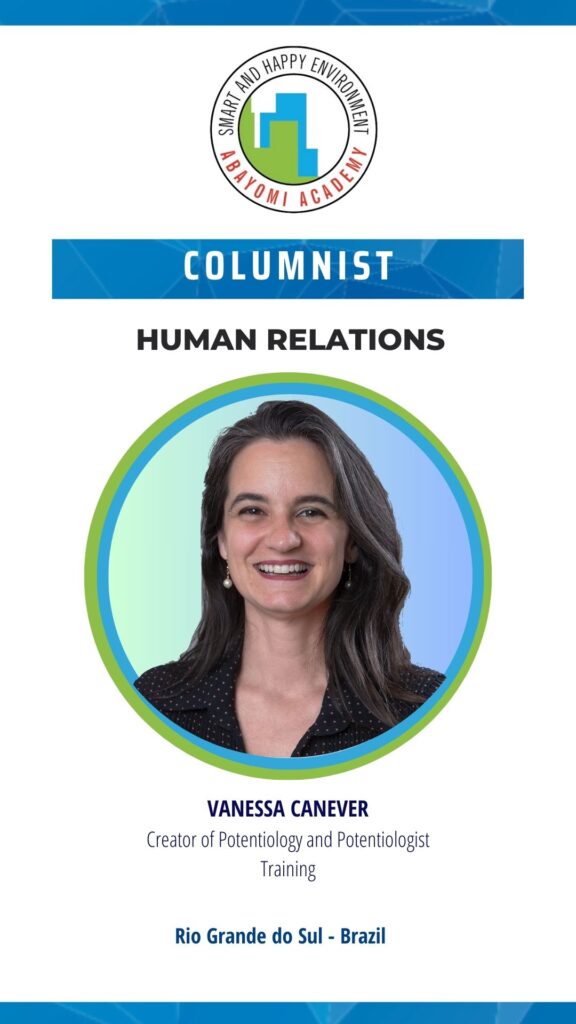
Creator of Potentiology and Potentiologist Training. Master’s Degree in Education. Postgraduate in people management, business pedagogy, group dynamics, and distance learning. Specialist in Emotional Intelligence and agile methods. Works with human potential and the development of people so that they can achieve better results, in the shortest possible time, and in a light way.